
Scottish roofing decision guides
What should you do about your roof problem?
Start with the problem you can see: active water, a damaged covering, repeated flat-roof trouble, an uncertain roof condition or work on a protected building. These plain-English guides explain immediate safety, repair and replacement choices, quote comparisons, surveys and Scottish permission questions. Use the route that matches your decision, stay off the roof and move to an inspection when the cause cannot be confirmed safely. You can also compare warning signs, the questions a useful quote should answer and the difference between a temporary measure and a permanent repair. For older or listed property, begin with the material and permission questions before anything is disturbed. If water is entering now, begin with safety and urgent damage. If the roof is stable but the cause is unclear, choose the survey checklist. Use the flat-roof cost guides when you need to compare repair and replacement quotes, and the listed-building guide before changing protected fabric. Each route shows the warning signs, trade-offs and next action, so you can move forward without diagnosing the roof yourself.

Start with the decision
Choose the question you need to answer
A roof problem can involve immediate safety, leak diagnosis, repair scope, replacement planning or permission. Starting with the question prevents a visible symptom from being treated as a complete diagnosis and keeps unrelated guides from competing for the same decision.
Use observations from inside, ground level or a normal window. Do not climb onto a roof, use a roof hatch or lean out to improve a photograph. Where people are at risk from falling material, unstable finishes or another immediate danger, keep clear and use the appropriate emergency route before collecting more evidence.
Is anyone at risk now?
Start with safe indoor actions, exclusion areas and the boundary between temporary protection and permanent repair.
Open the emergency roof damage guideDo you need a scope or quote comparison?
Define the defect, build-up, access, provisional work and report output before treating two proposals as equivalent.
Open the roof survey checklistCould the roof be protected?
Record designation, affected fabric and the proposed change, then ask the planning authority which consent route applies.
Open the listed roof permission guideRecently reviewed
New decision guides for slate and leadwork
Start here for a disciplined repair boundary, a lead-junction inspection brief or a larger slate ownership and re-slating decision.
 Slate ownership decisions
 Slate Roof Ownership and Re-slating Guide
Identify a Scottish slate roof, plan inspection and maintenance, compare repair with re-slating, specify matching material and handle consent questions. Read reviewed guide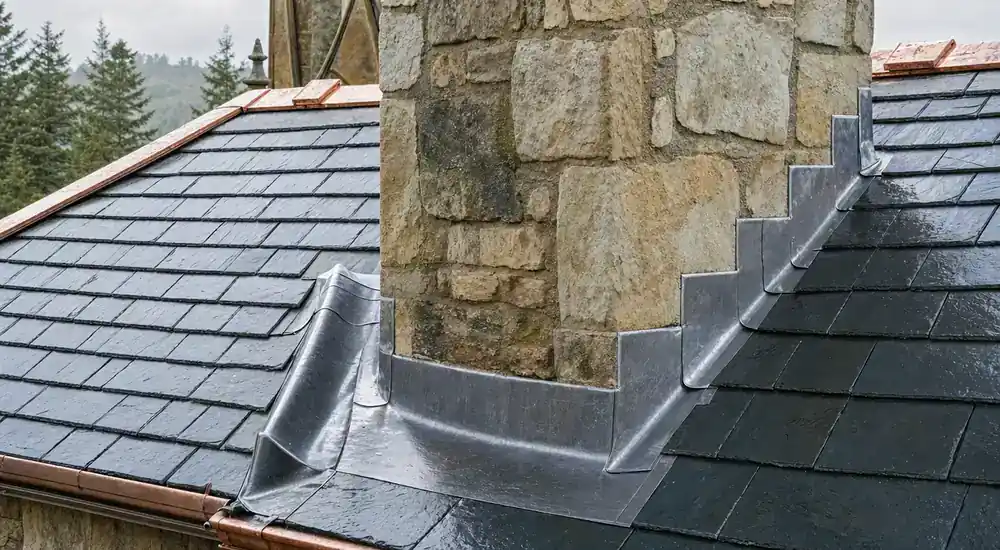 Leadwork decisions
 Lead Flashing Inspection and Repair
Identify lead flashing and gutter defects, assess movement, drainage and adjoining materials, then define repair, renewal, safety and consent questions. Read reviewed guide Slate repair decisions Traditional Slate Roof Repair Decisions
Assess slipped slate, fixings, sarking, lead and mortar together, then decide between a contained repair, staged work or wider re-slating in Scotland. Read reviewed guideLeaks, warning signs and evidence
Diagnose the decision before choosing work
Use these guides when the cause, urgency or inspection scope is unclear. They separate safe observations from diagnosis, show what belongs in an evidence record and explain how a report should turn defects and limitations into priorities.
 Leak and defect triage
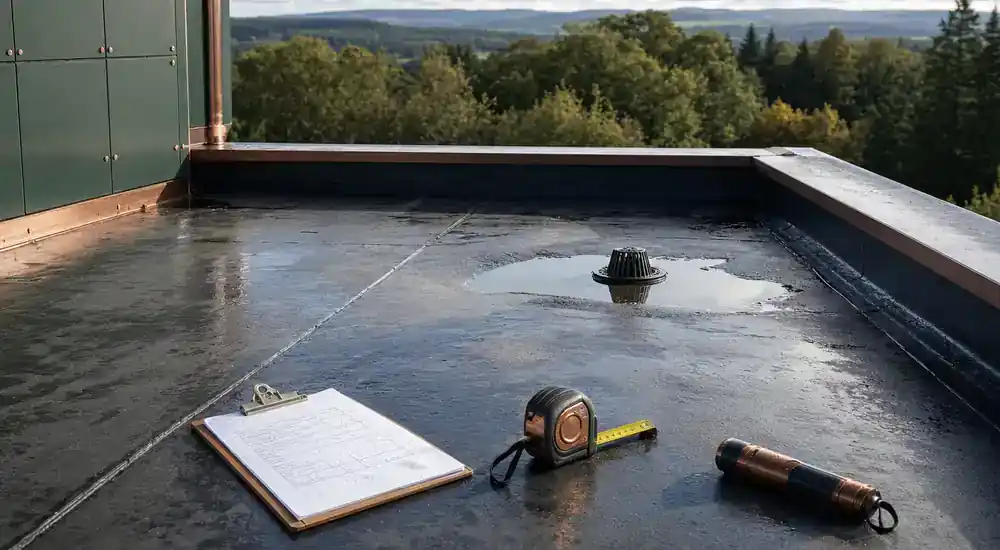
 Signs a Flat Roof Needs Repair
Use internal, external and system-specific signs to check a flat roof concern safely and choose repair, survey or urgent next steps. Read this decision guide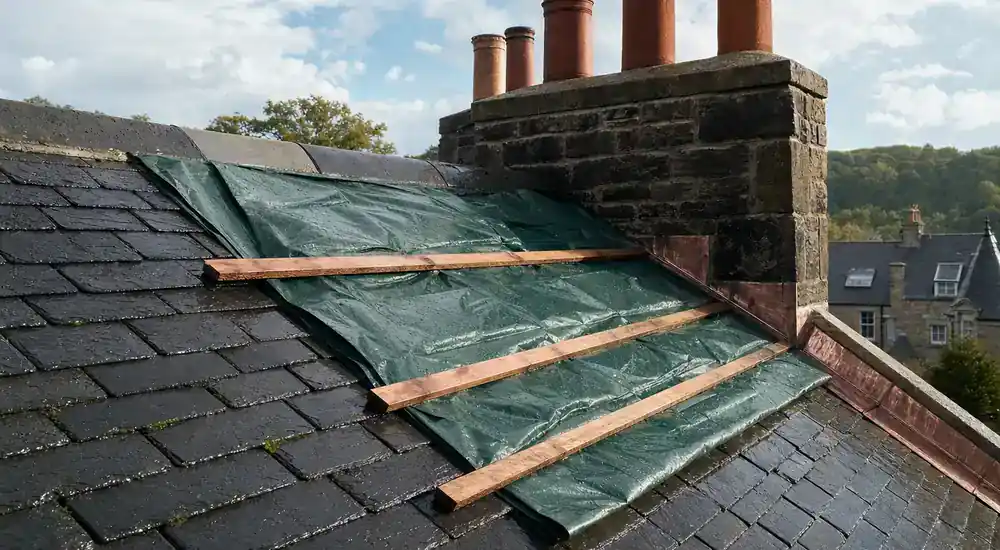 Urgent roof decisions
 Emergency Roof Repair Guide
Follow safe indoor actions after roof damage, separate temporary protection from permanent repair and choose the right inspection route. Read this decision guide Survey planning Roof Survey Checklist
Choose a Scottish roof survey that covers the roof, junctions, access, limits, photographs, repair priorities and the decision you need to make. Read this decision guideFlat roof scope and budgeting
Compare repair and replacement on the same evidence
A price cannot be compared until the work is defined. The repair guide separates diagnosis, temporary protection, local work and opening-up risk. The replacement guide covers the complete build-up, drainage, junctions, standards, access and handover record.
 Flat roof decisions
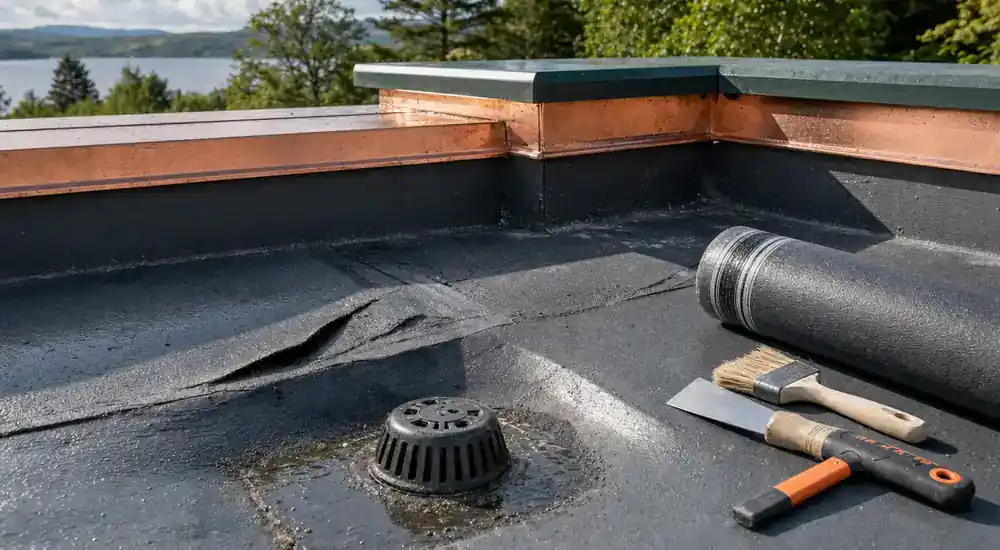
 Flat Roof Repair Cost
Understand flat roof repair cost drivers, diagnosis, opening-up risk, access and the written scope needed to compare quotes without relying on guesswork. Read this decision guide Flat roof decisions
 Flat Roof Replacement Cost
Compare flat roof replacement scopes through build-up, insulation, drainage, details, access and Scottish building standards rather than an unsupported rate. Read this decision guideTraditional and protected roofs
Retain fabric, define details and check consent
These guides cover different parts of a traditional-roof decision: the wider heritage context, planning authority questions, the boundary between local slate repair and re-slating, lead junction diagnosis, and the records needed when comparing a larger slate roofing scope.
 Heritage roofing
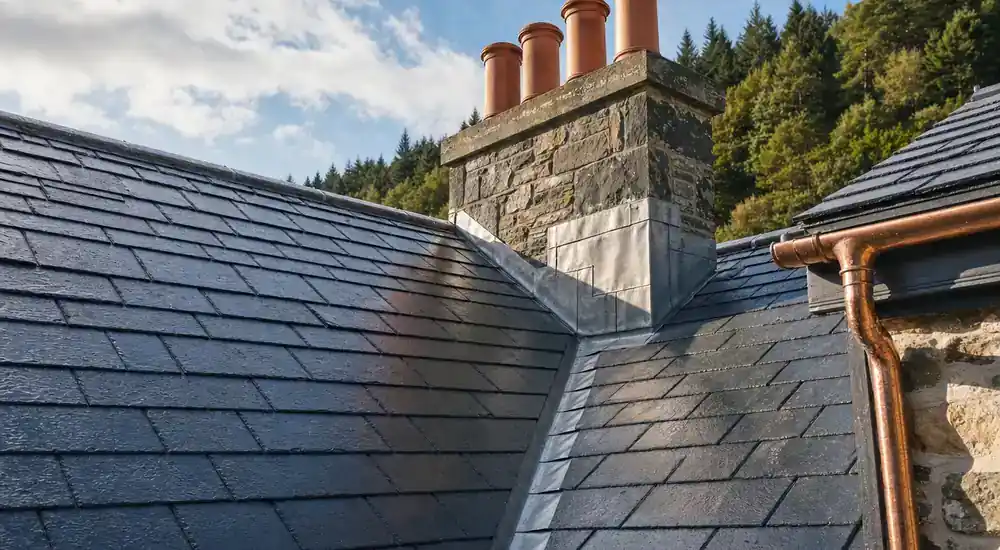
 Heritage Roof Repair Guide
Scottish guide to heritage roof repair, listed building consent, traditional slate, leadwork, lime mortar, surveys and maintenance. Read this decision guide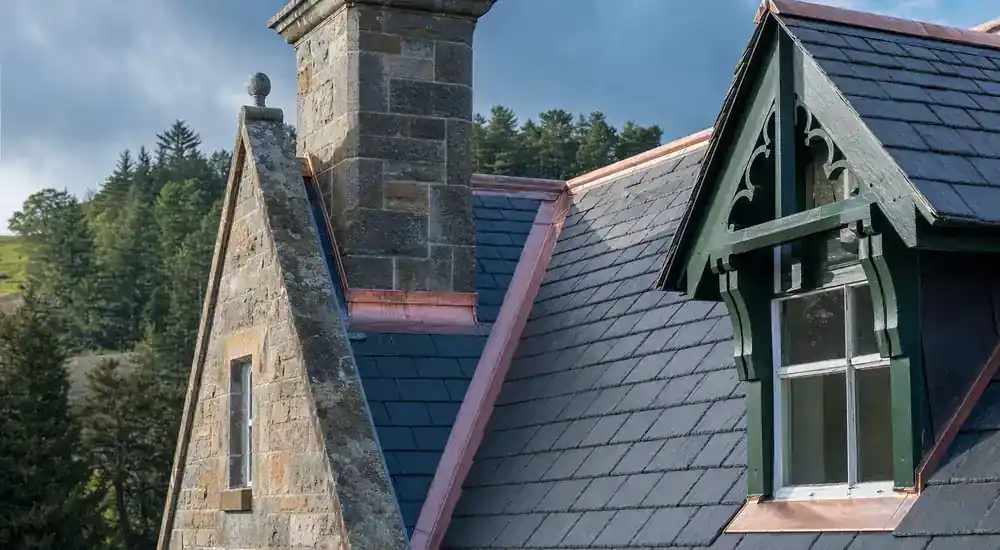 Consent and heritage
 Listed Building Roof Repair Permission
Work through listed building consent, conservation areas, building warrants and urgent protection before changing a listed roof in Scotland. Read this decision guide Slate repair decisions Traditional Slate Roof Repair Decisions
Assess slipped slate, fixings, sarking, lead and mortar together, then decide between a contained repair, staged work or wider re-slating in Scotland. Read this decision guide Leadwork decisions Lead Flashing Inspection and Repair
Identify lead flashing and gutter defects, assess movement, drainage and adjoining materials, then define repair, renewal, safety and consent questions. Read this decision guide Slate ownership decisions Slate Roof Ownership and Re-slating Guide
Identify a Scottish slate roof, plan inspection and maintenance, compare repair with re-slating, specify matching material and handle consent questions. Read this decision guideUse the evidence carefully
Carry one clear brief from observation to repair decision
The guide you choose should produce a short brief that can travel into an inspection, authority enquiry or repair proposal. Keep observations, interpretations and limitations separate so later decisions can be traced back to what was actually seen.
Useful observations to record
Note locations, dates, weather, internal signs, safe photographs, previous work and whether the condition is stable, recurring or changing.
Keep limitations visible
State inaccessible roof areas, concealed layers, uncertain materials and any conclusion that depends on opening-up or a different inspection method.
Choose the next route
Move into roof repair, flat roofing, heritage roofing or a roof survey only when the evidence matches that decision.
Ready to share the roof brief?
Send the property type, roof area, safe observations, internal signs, access notes and any known designation or previous work.
Share roof details