Signs that leadwork may be part of the leak
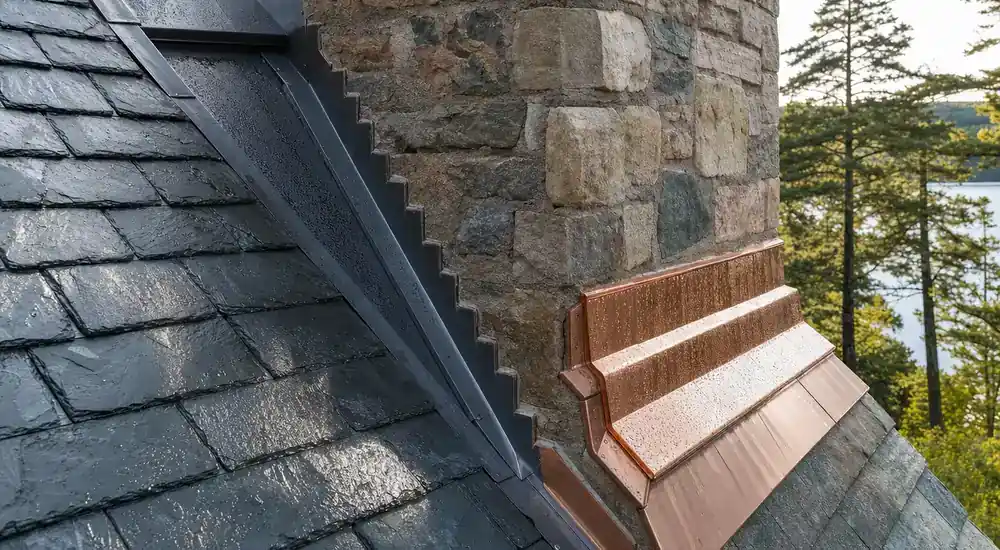
Leadwork protects chimney junctions, valleys, wall abutments, parapet or box gutters, dormers, bay roofs and outlets. A split, lifted edge, stain below a junction or repeated sealant patch can point towards leadwork, but none proves the source on its own.
Water can bypass sound lead through masonry, slate, tile, a blocked outlet or an adjoining membrane. Leak timing and rain direction can help separate these possibilities. Active water entry, loose material or an overflowing gutter may need urgent attention, depending on safety and access.
Why movement and support matter to lead repairs
Lead expands and contracts as temperatures change. Sheet size, joint spacing, fixings and the shape of the surface beneath it must allow that movement. Ripples, sagging, splits near fixings, weak laps or lifted edges can point to fatigue or restraint rather than a simple puncture.
The support beneath the lead matters as much as the visible metal. Damp boarding, movement in masonry, failed chases, incompatible fixings or outlet debris can make a surface patch short-lived. Some substrate conditions cannot be confirmed until careful opening-up.
Local repair, section renewal or wider replacement?
A designed patch, weld or local section repair may suit isolated damage where the surrounding lead, support and layout remain serviceable. Redressing or refixing can sometimes address a moved edge without broader fatigue. Sealant can hide defects and restrict movement, so it is not a default permanent answer.
Section renewal may suit damage around a joint, fixing or local substrate. Wider replacement becomes more credible when fatigue, poor falls, weak support or an unsuitable layout recur. The repair choice should address why the lead failed, not just cover the visible split.
A lead specification needs more than metal thickness
Thickness is only one part of the specification. Width, length, exposure, fall, joint spacing, fixing, support and expected movement all affect the detail. Flashings, valleys and parapet gutters perform different jobs, so the same material label cannot define every repair.
The proposed detail should show how upstands, laps, edges and outlets meet the surrounding construction and where water goes if an outlet blocks. Traditional profiles and visible character may also matter on an older or protected building.
Adjoining masonry and roof coverings can change the job
Chimney and wall flashings depend on masonry chases, pointing, soakers and the surrounding slate or tile. Valleys depend on their edges, support and discharge. A parapet-gutter patch will not solve failure caused by blocked outlets, poor falls or damaged cappings.
Lead can also meet flat membranes, roof windows and dormers. A clear quotation should distinguish leadwork from connected masonry, covering, drainage or joinery work. Use the heritage leadwork route when established profiles or protected fabric are central to the decision.
Access and fire precautions may affect the method
Valleys, parapets and chimneys can make access more complex than the visible defect suggests. Height, pitch, fragile coverings, gutter depth, public space and material handling can alter the equipment and protection needed.
Where a repair method may involve heat, combustible construction, occupied spaces and fire monitoring need separate precautions. Rainwater routes and areas below also need protection. These requirements can influence the method, programme and price.
What a useful leadwork proposal should explain
The proposal should name the lead element, the area draining into it and its outlet. It should distinguish movement or support failure from puncture or an adjoining defect, then compare repair and renewal where both are credible.
Ask what remains concealed, how movement will be accommodated and which masonry, covering, membrane or outlet work is connected. Check the exact dimensions, access, material availability, scope and timing for this roof before budgeting or arranging work.
Decide what to check next for lead roofing and leadwork
Before choosing lead roofing and leadwork, note the visible defect, when it appears, nearby junctions and any safe indoor signs. If the cause remains unclear, request a roof inspection that distinguishes a local repair from a wider issue; do not climb onto the roof to investigate.