Start with what is happening
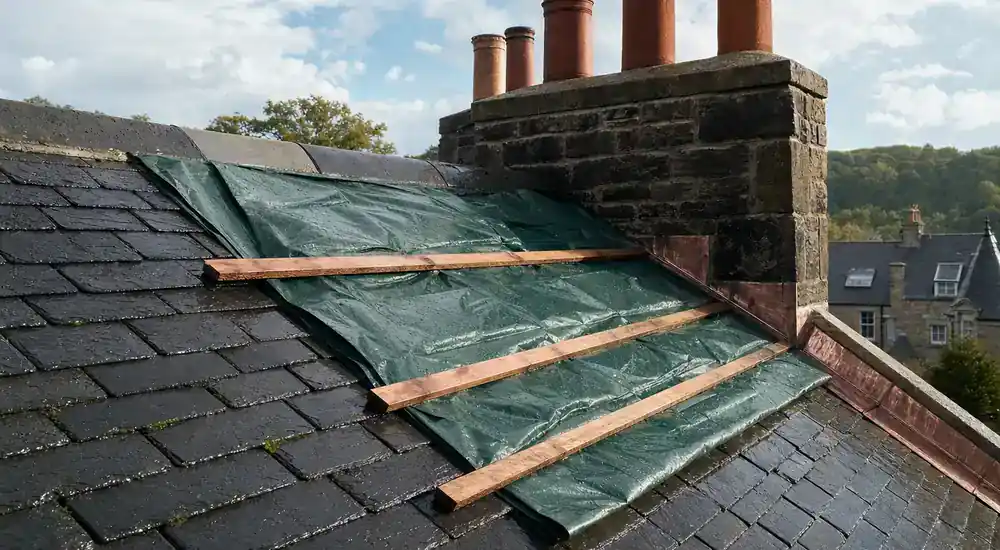
Use the urgent route for active water entry, an exposed opening or loose material after any immediate danger has been handled. Use planned roof repairs for a stable local defect. Choose an inspection when the cause is unclear, the problem keeps returning or several roof details may be involved.
A stain indoors is not always directly below the defect. Water can travel along underlay, timber, masonry or a roof junction before it appears, so a visible slate, tile or flashing should not automatically be treated as the whole problem.
Then choose the roof or detail
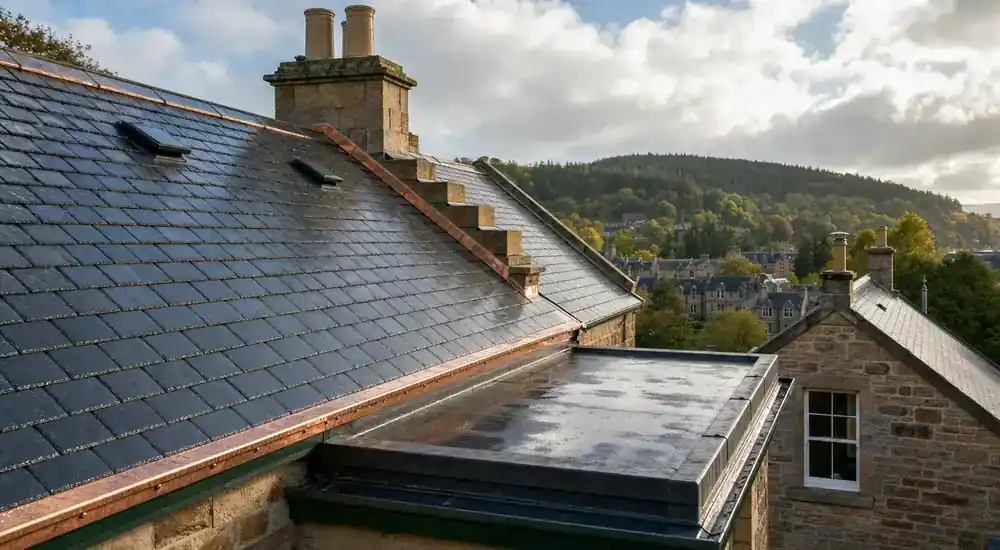
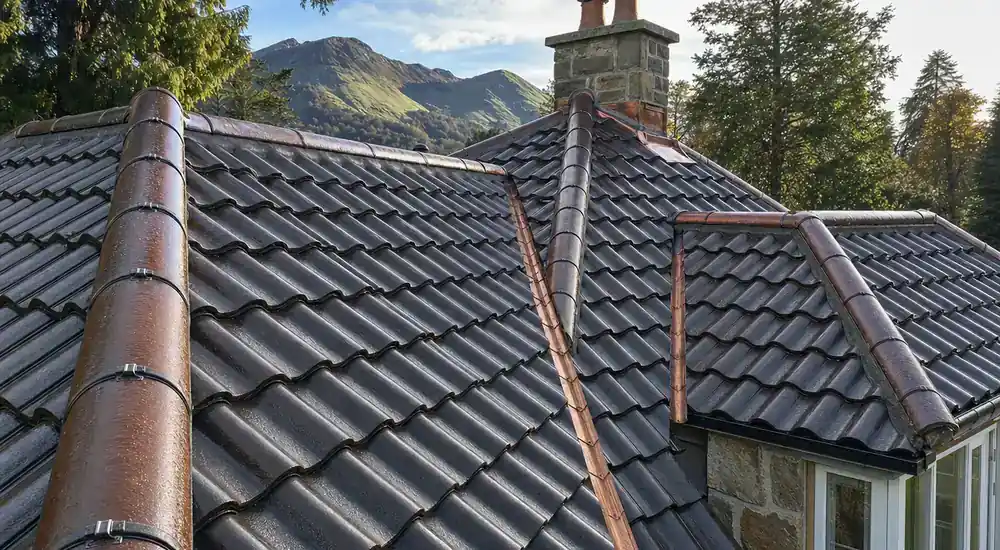
Use the flat-roof route for membranes, outlets, edges, ponding or deck concerns. Use the heritage route where traditional materials, listed status or conservation questions matter. Slate, tile, leadwork and chimney pages explain the checks specific to those parts of a pitched roof.
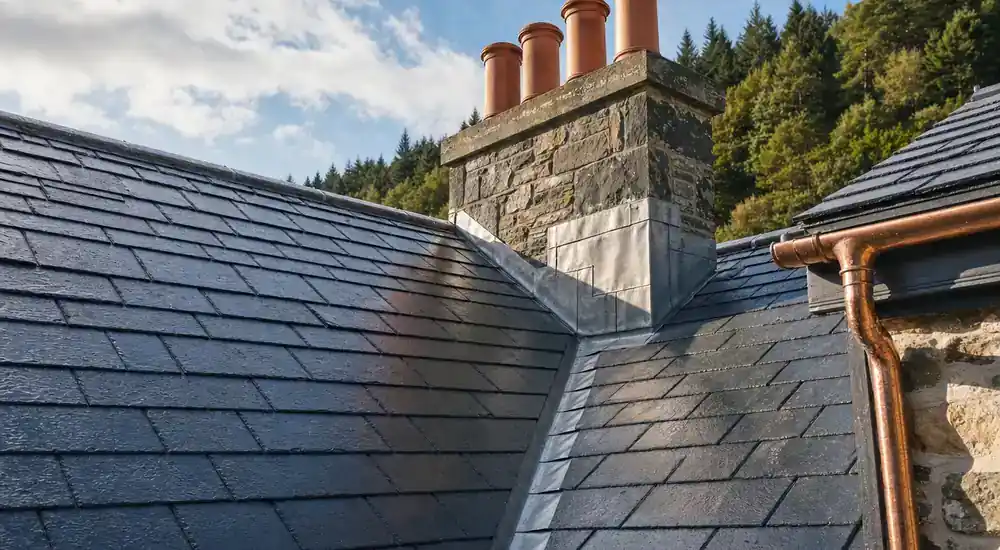
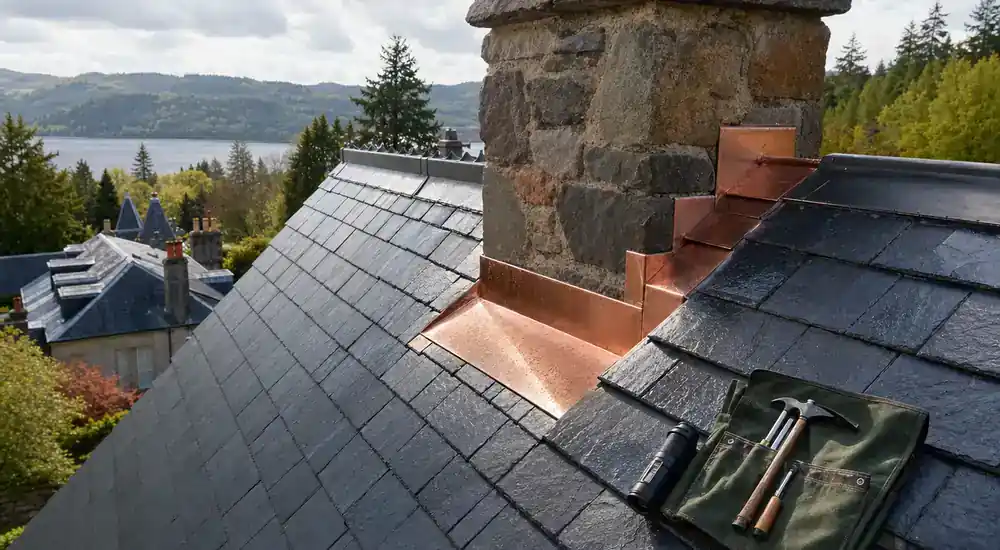
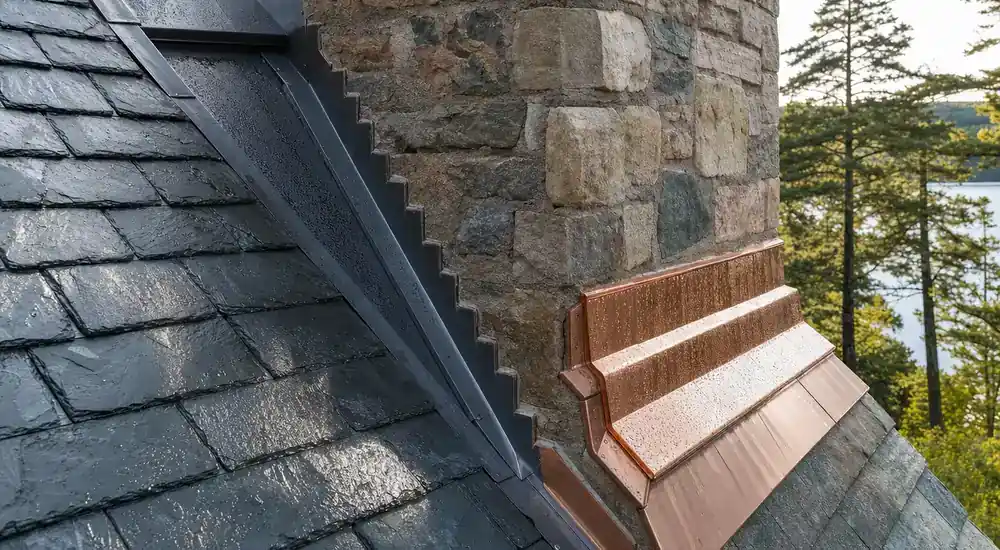
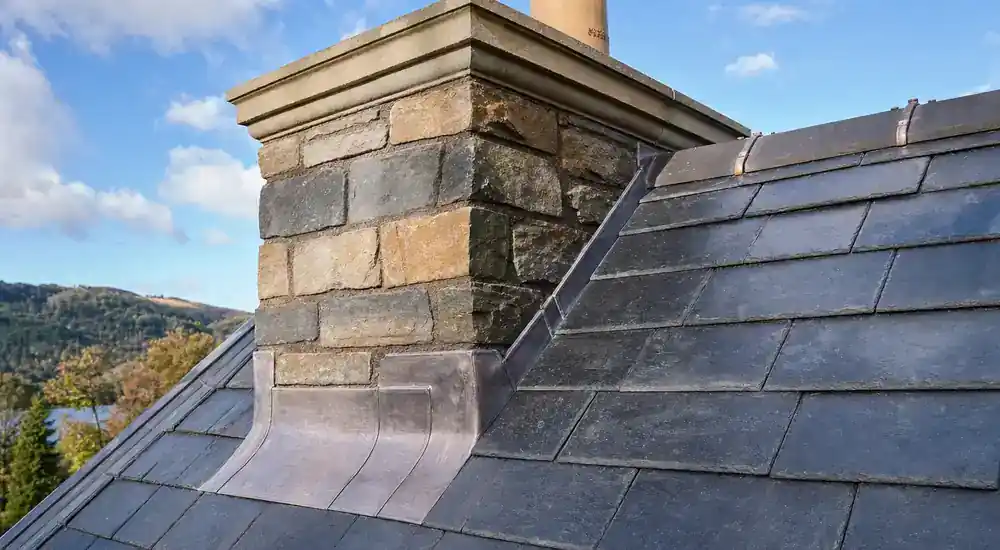
Lead moves and weathers differently from slate, tile and mortar. A chimney combines masonry, pots, haunching, flashings and the surrounding covering. Looking at each connected detail helps avoid replacing the most obvious component while leaving the water path unresolved.
Flat and heritage roofs need their own repair decisions
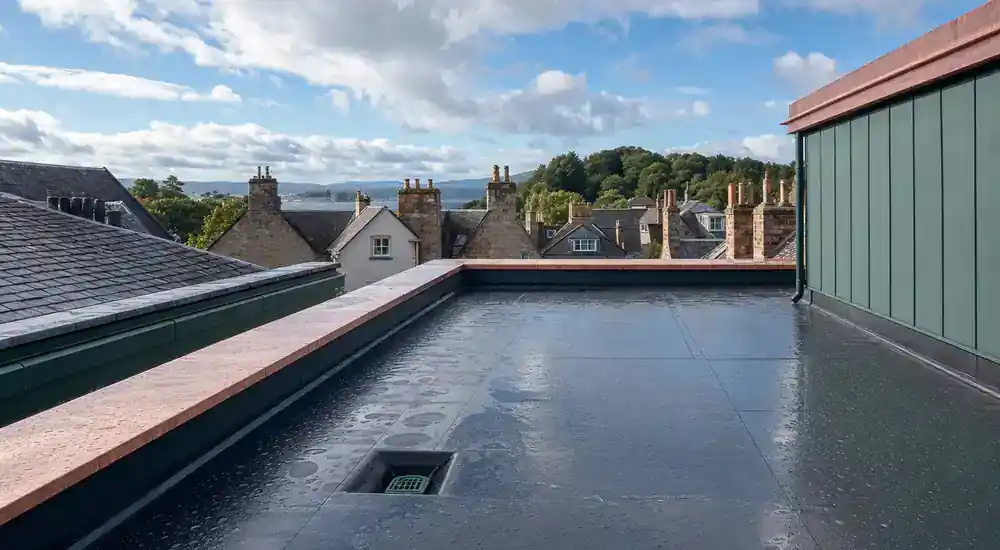
A flat-roof leak can involve the membrane, deck, insulation, falls, outlets, edges and penetrations. Compare repair with replacement only after those parts are considered together rather than applying pitched-roof assumptions to a low-slope system.
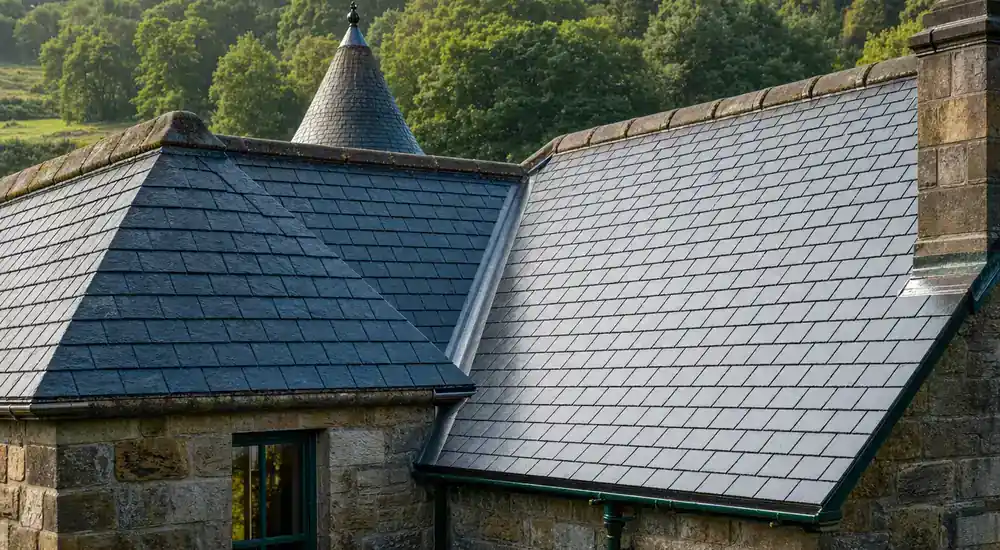
Older or protected roofs may need sound slate retained, replacement material matched and lead, chimney and lime details considered together. Check with the planning authority before work that could alter the character of a listed building.
Trace the whole water path before choosing work
Roof coverings rarely work in isolation. On a pitched roof, compare slate or tile condition with valleys, ridges, flashings, chimneys, gutters, roof windows and flat-to-pitch junctions. On a flat roof, connect membrane condition with upstands, trims, outlets, penetrations and the deck beneath.
Diagnosis should separate what was directly observed from what is only likely or possible. Weather direction, when the leak appears, internal signs, previous repairs and access limitations all affect confidence. Where part of the construction is concealed, the next step may be monitoring or carefully agreed opening-up rather than a confident promise based on surface evidence.
Stay off the roof while you compare the options
Use only observations available from inside, ground level or a normal window. Note when the issue began and whether wind or prolonged rain changes it. Do not climb onto a wet, damaged or unfamiliar roof, enter an unsafe void or use a ladder solely for photographs.
Building height, extensions below the roof edge, public areas, fragile materials and shared ownership can affect safe access. Choose an access method for the roof and task rather than guessing from one image.
Before agreeing work, ask what the proposal resolves
A useful proposal should describe the observed condition, likely cause, inspection limits, affected and adjoining details, urgency, access assumptions and why the work is local, staged or wider. Any temporary measure should have a separate follow-up action rather than being presented as the finished repair.
Do not set a budget, expect a response time or choose work from this page or one photograph. Check the diagnosis, scope, price and availability for the actual roof; if no route fits, choose “something else” and describe the visible problem in your own words.