How EPDM forms a complete flat roof
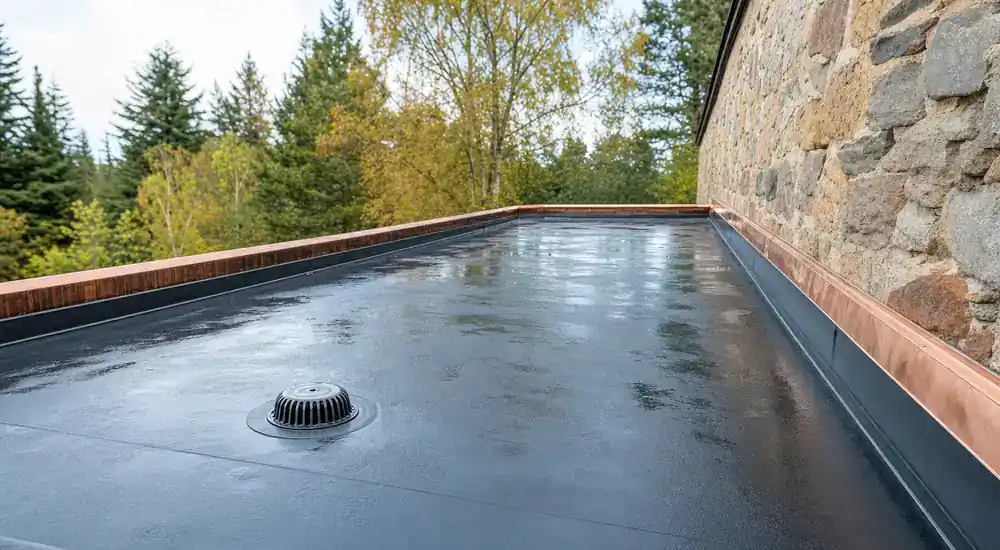
EPDM is a flexible rubber membrane used with compatible pieces at seams, corners, outlets, pipes and edges. Large sheets can reduce the number of field seams, but every roof still needs secure terminations and reliable drainage details. A plain garage or extension roof and one divided by rooflights, parapets or pipes can need very different sheet layouts.
The bond is only as sound as the surface below
The deck should be stable, clean and suitable for the chosen bonding method. Moisture, uneven boards, old bitumen, coatings and unsupported joints can affect adhesion or call for different preparation. On an existing roof, it matters whether old layers are removed, isolated or retained. A flexible membrane cannot compensate for a weak or wet base.
Where EPDM faults often become visible
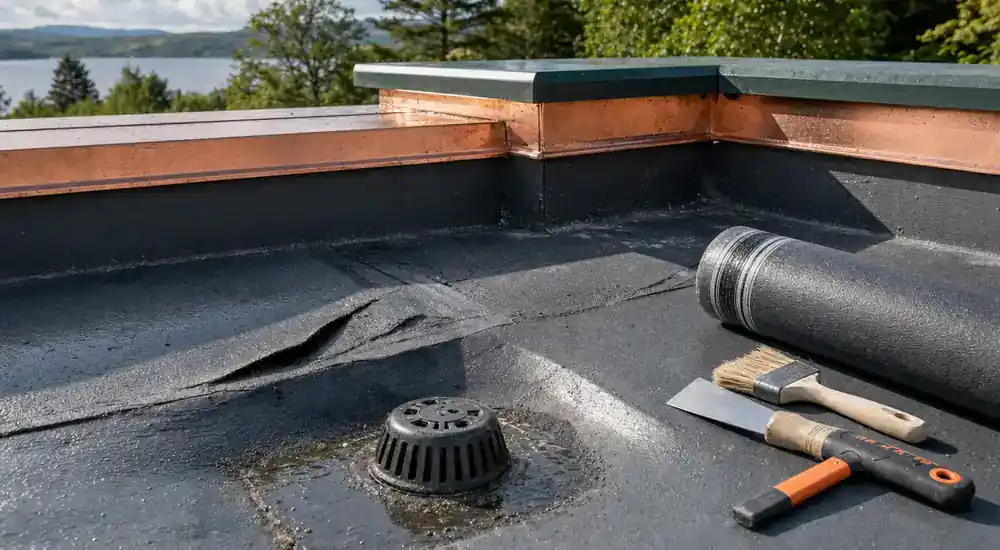
Punctures, open seams, pulling at corners, loose edges and failed outlet pieces can all admit water. Strong wind or driving rain may expose a weak perimeter or termination, while maintenance traffic can cause a local puncture. Wrinkles or areas that appear unbonded may be harmless in one situation and signs of stress in another. The surrounding membrane, substrate and fault pattern help show whether the concern is isolated or part of a wider problem.
Local repair or wider re-covering?
A compatible patch or seam repair may suit limited damage when the membrane, bond and deck nearby remain sound. Numerous stressed details, broad loss of bond, incompatible old patches or wet layers below can justify a wider option. The membrane should be identified before heat, solvent, general sealant or adhesive is used because visually similar materials may need different repair methods.
EPDM compared with GRP, felt and single ply
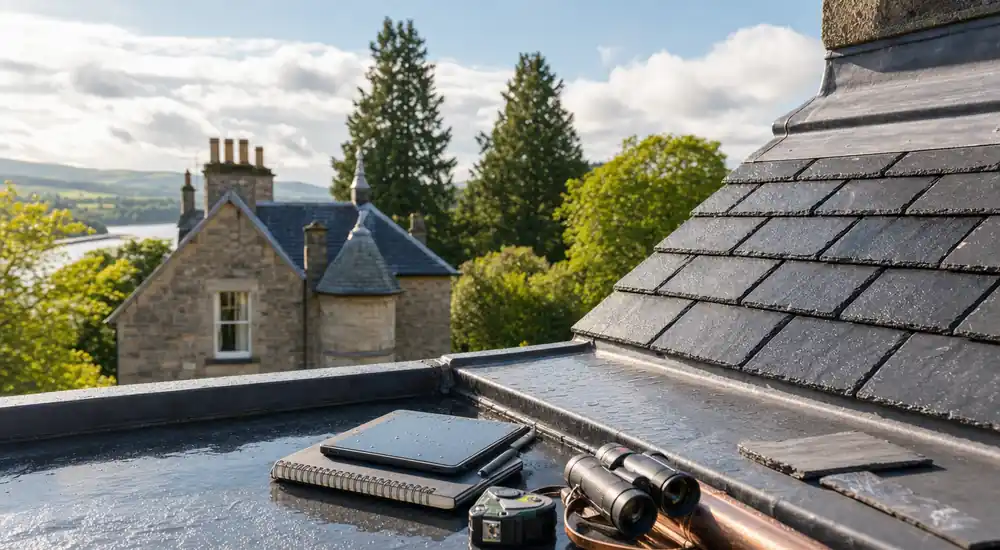
EPDM remains flexible, GRP forms a rigid laminate, felt uses reinforced bituminous layers and single ply uses a designed membrane and attachment system. Compare roof geometry, substrate, movement, edge complexity, maintenance traffic and future access. A large sheet is only useful when it can be positioned, bonded and terminated correctly on the actual roof.
A safe next step for an EPDM concern
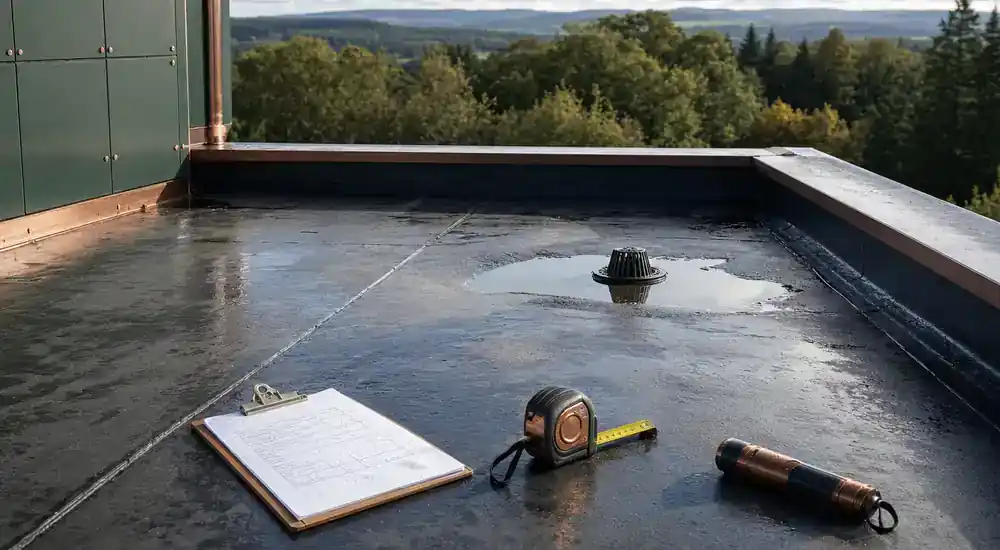
Safe photographs can show a puncture, seam, edge, outlet or pulling at a corner. Product papers or earlier invoices may help with membrane identification. Do not lift, cut or peel the sheet to look underneath. A survey can explore condition and compatibility; the contact route suits a known EPDM problem that is ready for discussion.
Decide what to check next for epdm rubber flat roofing
Before choosing epdm rubber flat roofing, note the visible defect, when it appears, nearby junctions and any safe indoor signs. If the cause remains unclear, request a roof inspection that distinguishes a local repair from a wider issue; do not climb onto the roof to investigate.