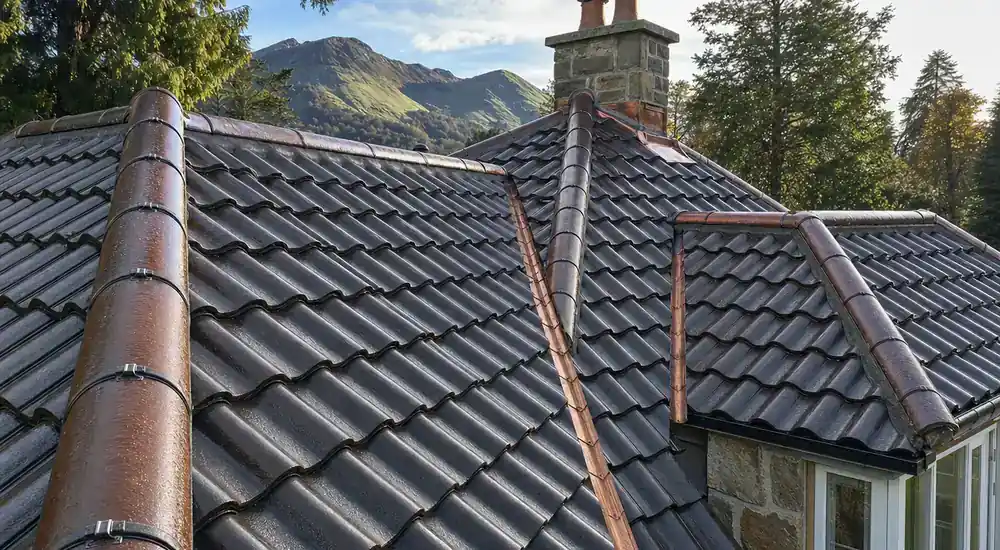
When one damaged tile may be a local repair
One cracked, displaced or missing tile may suit an isolated replacement when nearby tiles, fixings and underlay remain serviceable. A local repair can also address a single loose ridge or verge detail. Moss, fading or weathering alone does not prove that a tiled slope needs replacing.
A loose unit above an entrance, falling fragments or an exposed opening needs urgent safety attention. Keep people away from the area below. A stable crack or historic damp mark can follow the planned route, although the source still needs checking before work begins.
Why a damp mark may not sit below the failed tile
Water can enter at a valley, flashing, verge, chimney or roof penetration and then travel along underlay before appearing indoors. Cracks, chips and displaced tiles matter, but so do ridges, hips, verges and eaves. The whole water path should be checked rather than replacing the tile nearest the stain.
Safe roof-void signs such as tears, staining, decayed support or daylight can show whether a defect remains local. Leak timing and wind direction can also narrow the likely route. Battens, fixings and concealed underlay may need closer access or careful opening-up.
Isolated replacement or wider tile renewal?
An isolated repair replaces compatible units and corrects a local fixing or junction while retaining sound work. It is less dependable when neighbouring tiles are brittle, earlier substitutes no longer interlock or damage continues across several parts of the slope.
Wider renewal may be proportionate where tiles, battens or fixings are failing across an area, the underlay cannot be reached through local work or repeated repairs have not solved the problem. The distribution of defects matters more than roof age alone.
A compatible replacement must fit as well as match
A replacement tile must suit the gauge, headlap, side interlock and fixing. Manufacturer marks, dimensions, nibs, profile and material are often more useful than colour, especially when a product line is discontinued or heavily weathered. A poor fit can create a route for wind-driven rain.
Clay plain tiles, concrete interlocking units and other systems behave differently. Roof pitch, exposure and laying pattern affect the choice. A listed or conservation-sensitive building may also need planning advice before a material or appearance change.
Ridges, valleys and flashings can change the repair
Valleys, wall abutments, chimneys, roof windows, vents and level changes interrupt the tile pattern. Flashing, mortar, soakers and nearby units work together at these points. Debris in a valley or gutter can alter water flow even when the tiles remain sound.
Ridges, hips, verges and eaves finish the roof edges. A useful quotation should distinguish tile replacement from mortar, mechanical-fixing, leadwork, drainage or flat-roof junction work, so each item has a clear purpose.
Safe access can affect the method and quotation
A safely accessible roof void can show staining, daylight, underlay and penetrations. Do not enter where flooring, lighting or structure is uncertain, and do not lift tiles or walk on the roof. A spare tile kept with the property may help establish the product without risky access.
Height, pitch, lower roofs, narrow passages, gardens, parking and public areas affect access and protection. Shared buildings may also need factor or co-owner authority. These constraints can change the practical repair method and its cost.
What a useful tile repair proposal should explain
The proposal should name the tile type and affected slope, show whether the damage is isolated or repeated and explain any junction or underlay concern. It should distinguish local repair from wider renewal and set out connected ridge, valley, lead or chimney work.
Ask how compatible replacements will be chosen, what remains concealed and what could change after opening-up. Use general repairs for mixed defects and an inspection when the cause remains unclear. Check the material choice, scope, price and timing for this roof before budgeting or arranging access.
Decide what to check next for tile roofing
Before choosing tile roofing, note the visible defect, when it appears, nearby junctions and any safe indoor signs. If the cause remains unclear, request a roof inspection that distinguishes a local repair from a wider issue; do not climb onto the roof to investigate.