Felt Flat Roofing

Understand reinforced felt layers, laps, upstands, outlets, blister and split diagnosis, repair, overlay and strip-up replacement decisions.

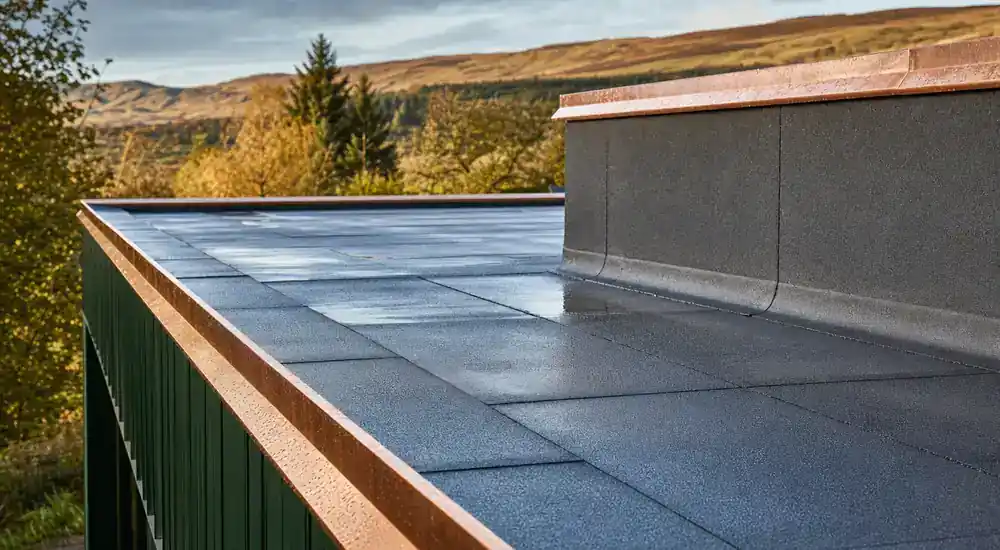
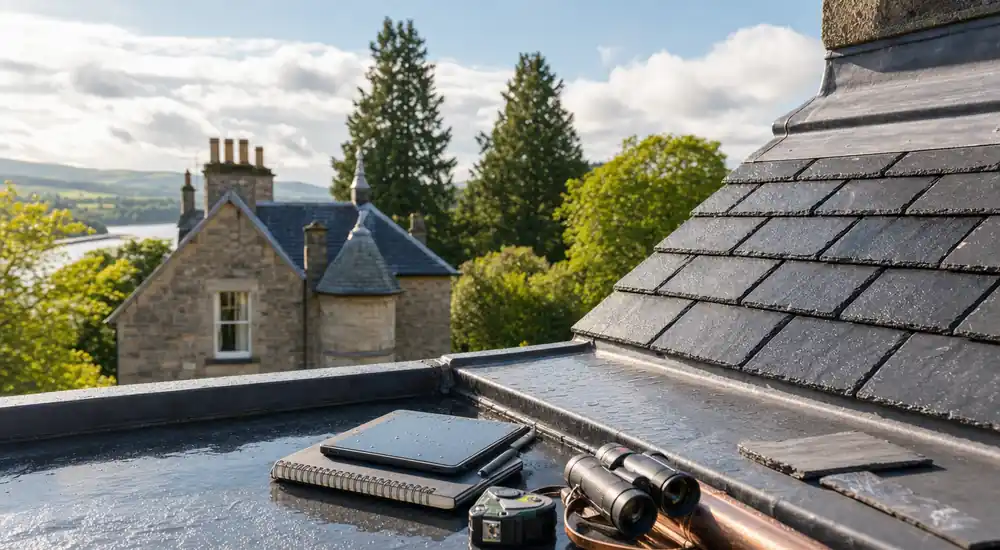
Reinforced felt flat roofing with mineral surface, laps and upstands.

Understand what a modern felt specification means

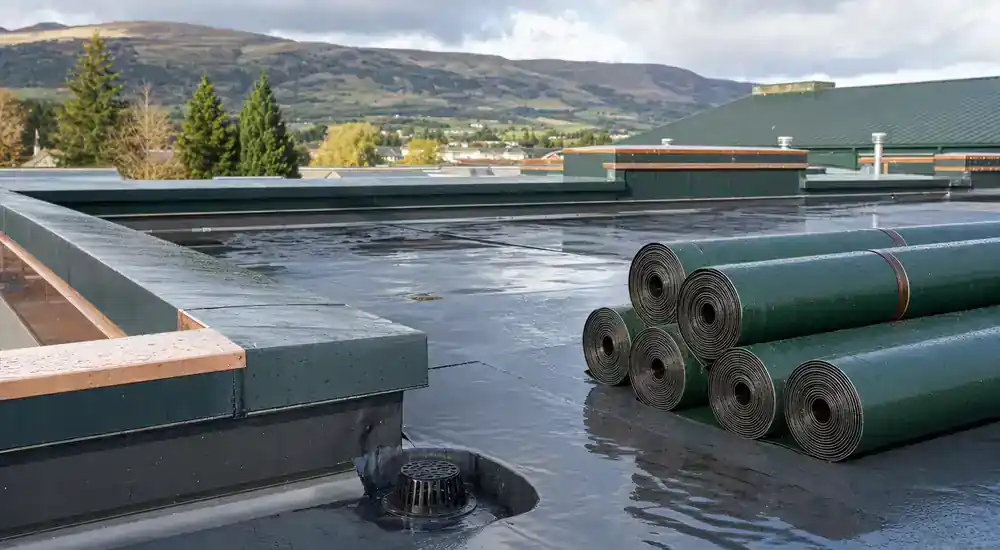
Felt flat roofing for buildings is normally a reinforced bituminous membrane system, not simply a roll of lightweight covering associated with a small shed. The specification may use base, intermediate and cap layers or a system designed for a particular substrate and application method. Ask for the full build-up and product roles to be identified. The word felt alone does not explain reinforcement, surface finish, attachment, insulation interface or how the system is detailed at the roof perimeter.

Read the roof as a layered build-up

The layers work together, so a surface patch cannot reveal whether lower membranes, insulation or deck have been affected by water. On renewal, record what is being removed or retained and whether old overlays are present. The substrate must be suitable for the proposed bonding or fixing method, and the vapour-control and insulation arrangement should be coordinated with the waterproofing. Where concealed condition could change the decision, a survey can define targeted investigation rather than assuming every layer is dry.

Give laps, upstands and outlets equal attention

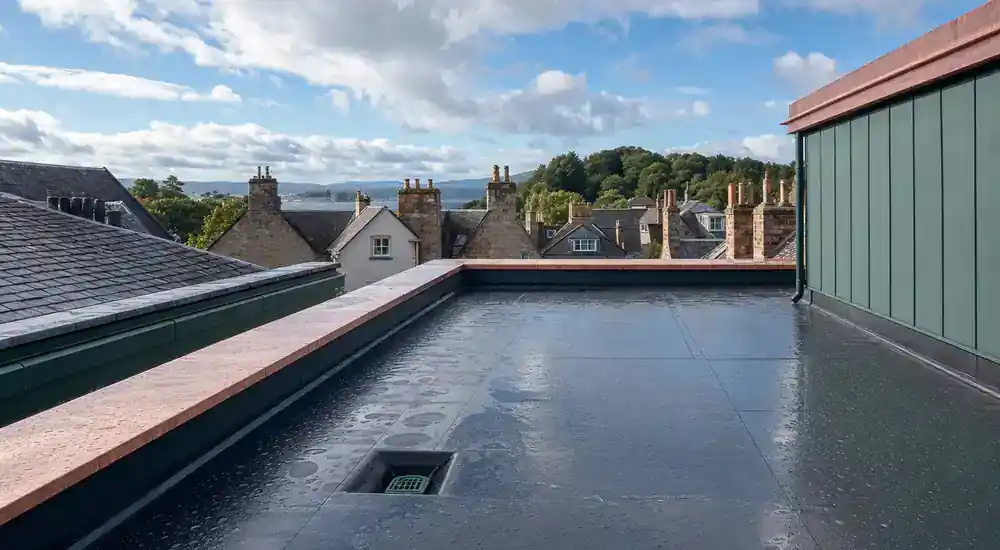
Reinforced bituminous sheets form a continuous system through correctly arranged laps and details. End laps, side laps, corners, changes of level, rooflight kerbs, wall junctions and outlet pieces need enough room and sound substrates. The cap sheet should not be asked to bridge unstable gaps or compensate for poor falls. Ask how each junction will be formed and how water is kept moving towards drainage, especially where previous patches have created ridges or restricted an outlet.

Diagnose blisters, splits and open details

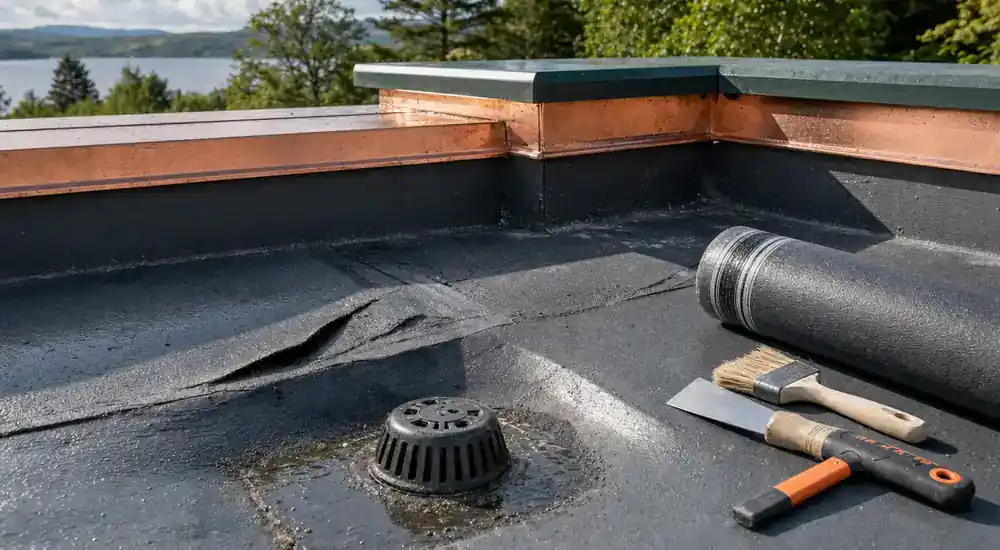
Blisters can indicate trapped air or moisture, while splits may relate to movement, stress or deterioration; neither should be diagnosed from a photograph alone. Open laps, worn surfaces, cracked coatings and defects around edges or penetrations can create different repair scopes. Map whether signs are isolated or repeated and check for internal evidence below them. Cutting or opening a blister without understanding the layers may release moisture or create a larger defect, so investigation and reinstatement should be planned together.

Choose patching, overlay or strip-up deliberately

A compatible patch can address a limited defect when the surrounding felt and supporting layers remain suitable. Overlay may be considered only after moisture, adhesion, stability, loading, falls and detail heights are checked. Strip-up exposes the deck and removes failed layers but requires a plan for waste and temporary protection. Ask the proposal to explain why the chosen route fits the evidence, which layers remain and what happens if wet insulation or damaged decking is found during the work.

Compare felt with sheet and laminate alternatives

Felt offers a layered bituminous approach; EPDM uses flexible rubber sheets, GRP forms a rigid site-applied laminate and single ply uses a designed membrane and attachment system. Compare the complete roof, not broad claims about which material is cheaper or lasts longest. Geometry, substrate, movement, installation method, outlets, fire and thermal design, roof traffic, access and future repairability matter. The quotation should also distinguish membrane work from deck, insulation, drainage and edge alterations.

Build a useful felt roofing enquiry

If records exist, share the membrane name, number of layers, installation date and earlier repair information without assuming they remain accurate. Add safe photographs of laps, blisters, cracks, upstands and outlets, plus leak dates and access constraints. State whether the decision is local repair, overlay, strip-up replacement or a new specification. This helps an assessment focus on layer condition and compatibility rather than treating every dark mineral surface as the same felt roof.

Survey-led recommendations

Flat roofing work should start with the roof build-up, falls, drainage and edge details. A targeted survey helps decide whether a local repair, overlay or full replacement is appropriate.

Next steps for flat roof work

After the roof has been assessed, the next step may be a local membrane repair, drainage improvement, planned replacement, maintenance advice or a more detailed flat roof survey.

Frequently asked questions

Is all flat roof felt the same?

No. Reinforcement, layer arrangement, surface finish, application and compatible components vary. Ask for the complete system rather than a generic material label.

Can a blister simply be cut and sealed?

A blister needs diagnosis because trapped air or moisture and the condition of lower layers affect the repair. Investigation and reinstatement should be planned together.

Can new felt be overlaid on old felt?

Only after moisture, adhesion, stability, loading, falls, compatibility and available detail heights have been assessed.

What should a felt roofing quotation identify?

Look for retained and removed layers, substrate work, insulation, membrane build-up, laps and details, drainage, access, waste, provisional items and exclusions.

Tell us what you have noticed

Six short steps collect the details needed to route your enquiry. Stay at ground level and never climb onto a roof to gather information.

Step 1 of 6