The exact Fife settlement matters
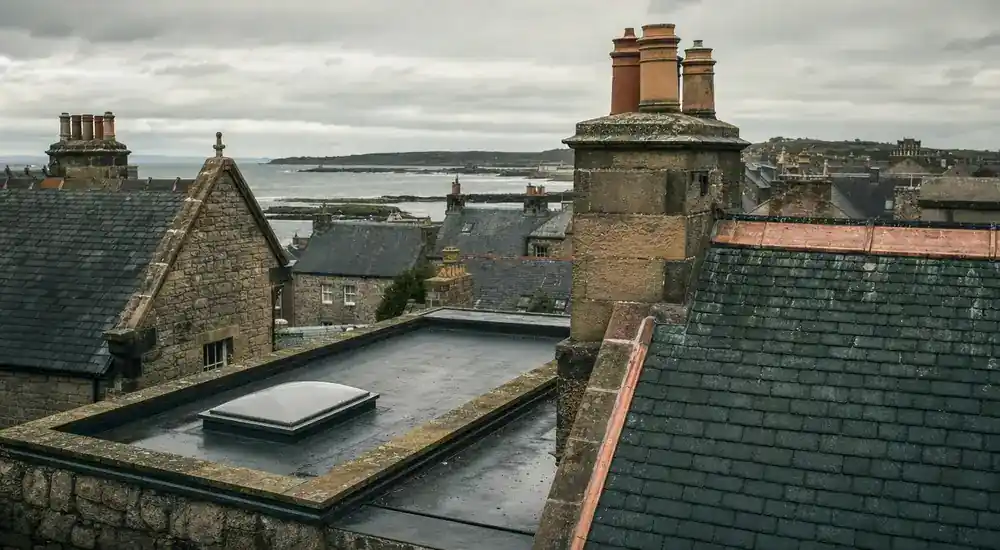
A dense street in Dunfermline, an open coastal edge near the East Neuk and a standalone inland property can create different access and weather questions. Use the postcode and immediate setting to compare the access, exposure and repair questions that apply to the actual roof.
Building use, storey height, shared ownership and the roof area concerned also shape the decision. Narrow streets, shared courts, rural tracks and occupied entrances should only be considered where they fit the actual property.
Settlement detail is also helpful when traditional materials vary between neighbouring buildings. The roof should be understood from its own slate, pantile, lead and masonry details rather than from a broad assumption about a Fife town or coastal village. A neighbouring roof may offer visual comparison, but it does not prove the same construction, permission status or repair choice. Each building can have its own alterations and hidden layers.
Coastal edges and rainwater paths should be considered together
On a genuinely exposed property, ridges, verges, eaves, flashings and gutters may show a different pattern from sheltered sides. The exposed elevation and relevant weather are more useful than an assumption based on the word Fife.
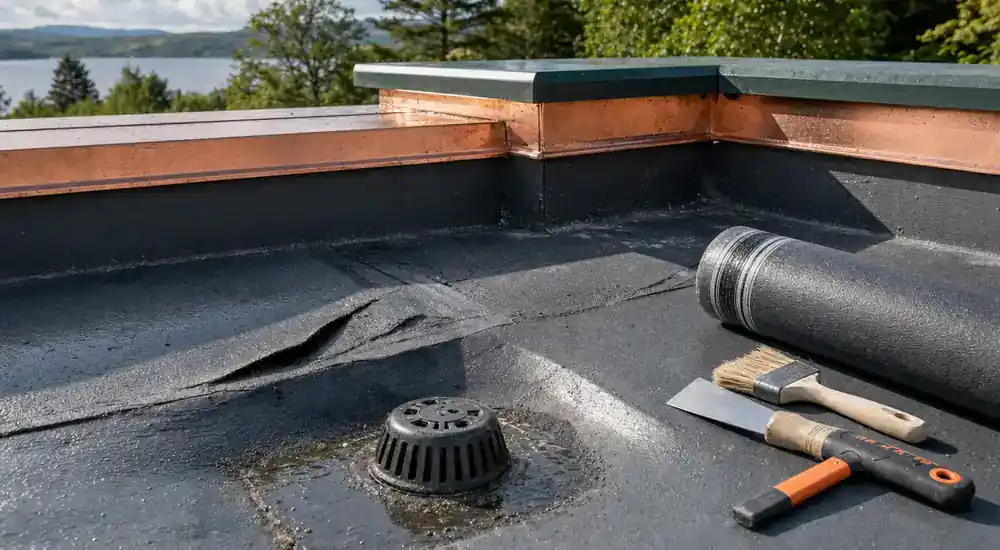
A blocked or displaced gutter, valley or outlet can wet masonry and lower roofs even when the main covering appears intact. Edge security, covering condition and water discharge are separate questions that may need one inspection.
Traditional coverings need more than a colour match
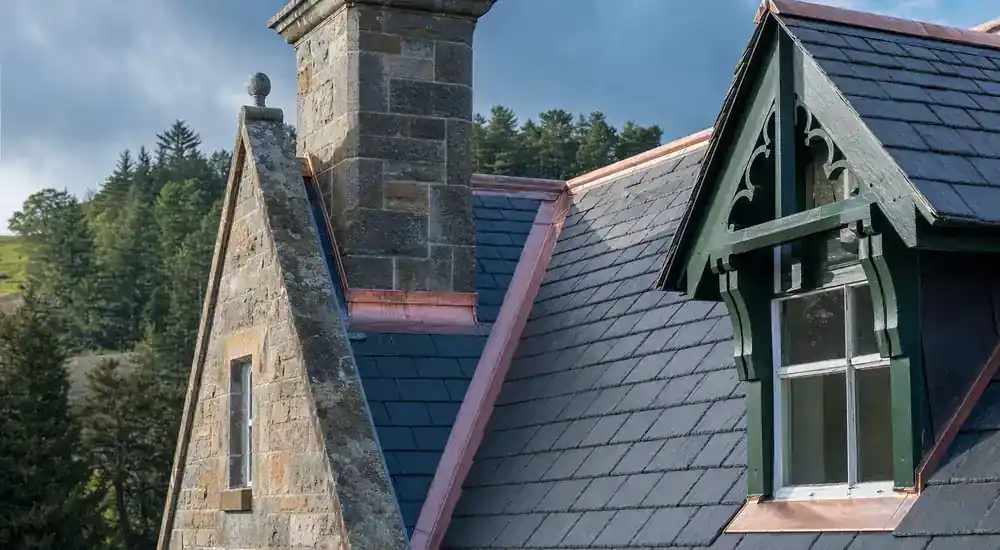
Older Fife buildings can use slate, pantile, lead and masonry details that contribute to roof character. Dimensions, profile, coursing, junctions and surrounding sound material affect compatibility. A replacement chosen by colour alone may not weather or fit correctly.
Fife Council says larger repairs to listed buildings, such as replacement slate or gutters, are likely to need listed building consent and recommends early contact. Check the building and proposed work before ordering materials.
Grouped maintenance still needs clear priorities
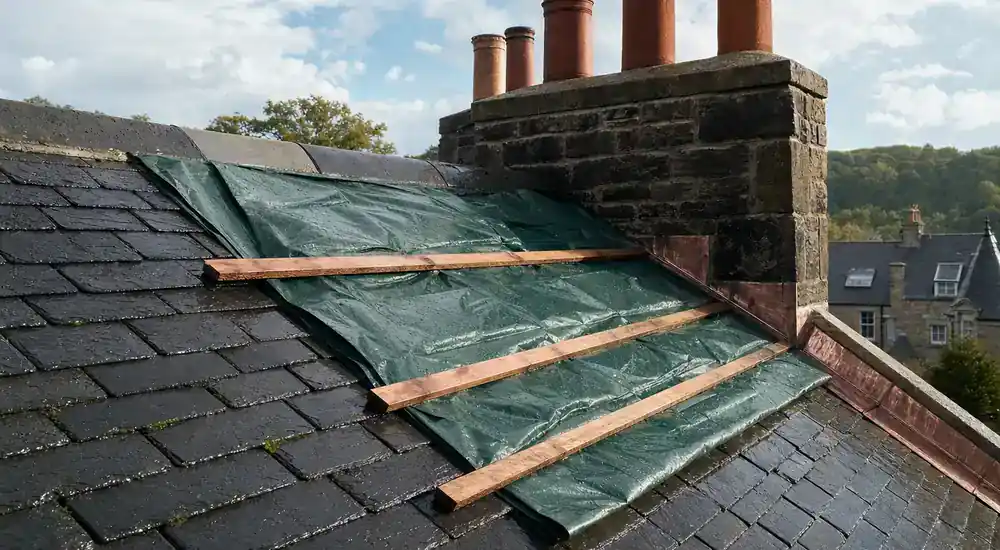
It can be efficient to inspect gutters, chimneys, coverings and flat sections during one planned access. That does not make every item part of one repair. Active leaks and hazards should remain distinct from routine maintenance or inaccessible details.
For a shared, public or commercial building, occupancy and entrances can affect sequencing. Each fault can have its own location and purpose so decision-makers understand what is urgent, what can wait and what needs closer inspection.
Repair, heritage and survey routes answer different needs
The repair guide suits a known local defect. Traditional material matching or listed status points to heritage guidance. A survey is useful when several water paths are possible or when the overall roof condition must be understood.
Safe photographs from inside, ground level or an ordinary window can show the setting and fault pattern. Do not climb for a view of a coastal edge, chimney or outlet.
Choose the next Fife roof decision
Use Fife Council information to check listed-building and consent questions for the exact property, then keep that authority decision separate from the contractor and repair choice.
Choose a repair route for a known local defect or a survey when several water paths or overall condition are unclear. Before appointing anyone, check their service area, relevant material experience, proposed access, price and timing for the exact settlement.