Keep people clear, protect occupied space only where that can be done safely and choose the urgent repair route for active water or unstable material. Treat temporary protection and permanent repair as separate decisions.
Protect people before property
- Keep people clear of unstable ceilings, falling material and unsafe electrical areas; use emergency services for immediate danger to life.
- Do not climb onto a roof, lean from a window or use a roof hatch to trace a leak.
- Treat temporary protection separately from diagnosis and permanent repair.
- After containment, check the roof system, junctions, internal damage, access and any limitations before work is specified.

Make the occupied area safer first
Look at what is happening from a safe position inside or outside the exclusion area. If there is immediate danger to life, fire, collapse or another emergency, call the emergency services rather than approaching the roof problem.
Water entering the building
Keep people away from wet electrical fittings and any bulging ceiling. Move possessions only where the route is safe, use a container only if it can be placed without standing below an unsafe area and avoid puncturing or pulling down finishes.
Falling or unstable material
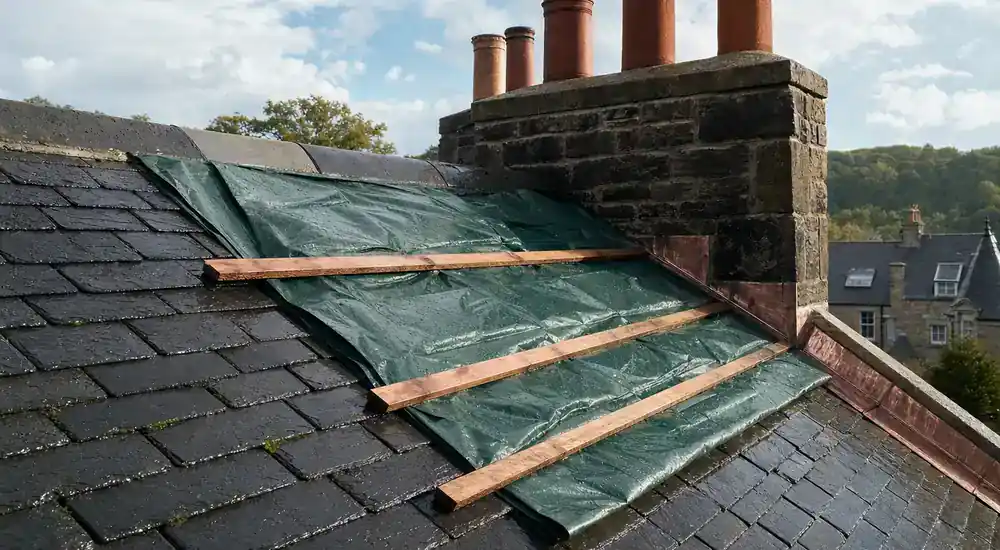
Close off the area below loose slates, tiles, masonry, gutters or ceiling material. Do not attempt to retrieve debris from the roof or a restricted external area; note its safe ground-level location if that helps identify the source.
Match the message to the scenario
A concise scenario description helps the next person understand risk without pretending the cause is known. State what you can see, when it began and how it is changing.
Active leak
Give the room, ceiling or wall location, approximate flow, first time noticed and weather conditions. Say whether the water is near electrics or an unsafe ceiling, but do not enter the area to improve the description.
Storm movement or missing covering
Report visible missing or displaced material, falling debris, wind exposure and whether the area below is secured. A wide safe photograph can show the scene better than an attempted close-up.
Flat roof or outlet problem
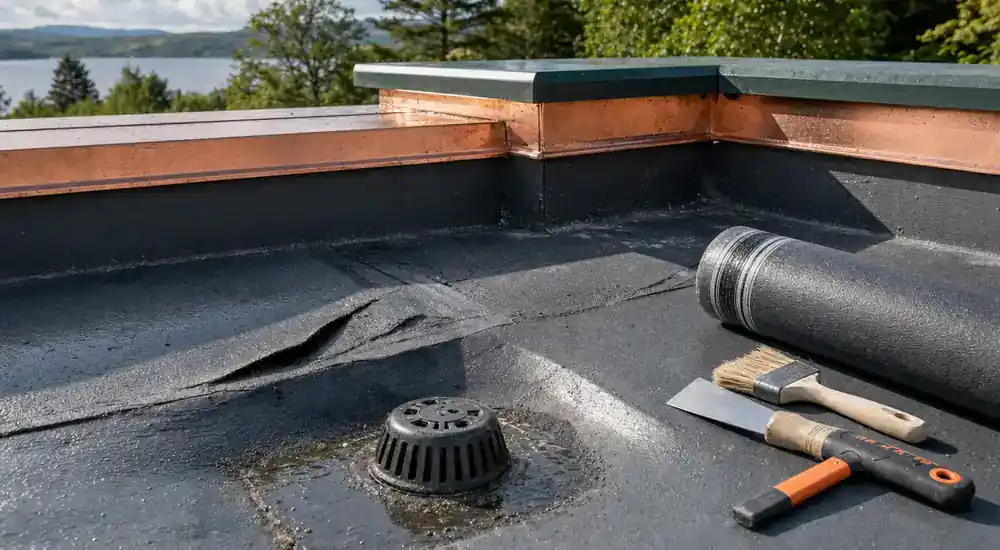
Report visible standing water, overflow, blocked-looking outlets and the relationship to a rooflight, parapet or abutment. Do not step onto the roof to clear an outlet or test the membrane.
Chimney, lead or heritage detail
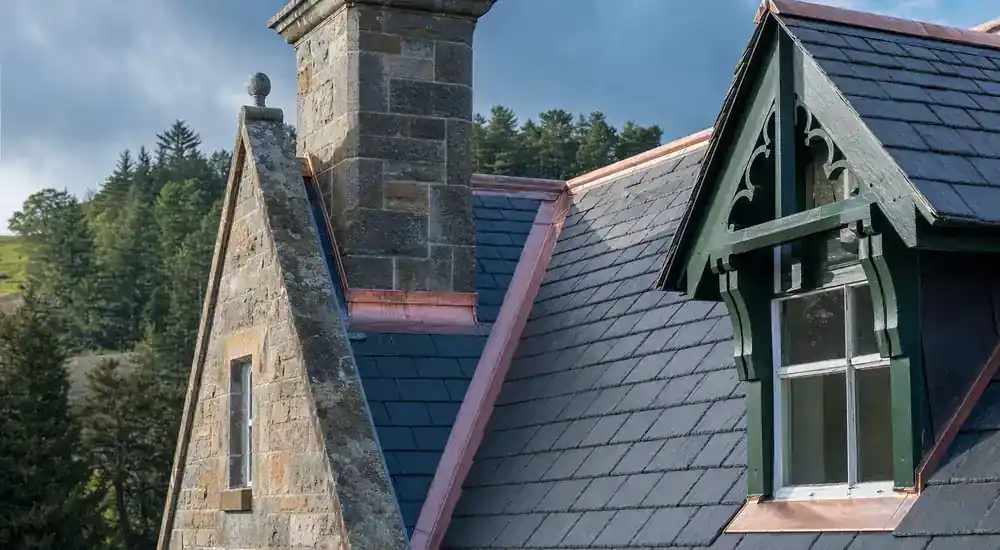
Report loose masonry, displaced lead, slate loss and whether the building is listed or in a conservation area. Temporary work should minimise disturbance and be noted for the later consent and repair decision.
Use safe viewpoints only
HSE guidance says work at height must be properly planned and undertaken by competent people with suitable equipment. Treat the roof and rooflights as unsafe to stand on unless a competent assessment has established otherwise.
Useful photographs
Take a wide exterior view from ground level, internal views from outside any exclusion area and a photograph of fallen material only if it is safe to approach. Keep original timestamps and add a short caption rather than editing away the surrounding scene.
Useful facts
Note property type, roof type if known, occupied areas, safe access routes, keys or shared-management contacts, previous work and whether the condition is stable, spreading or recurring.
Distinguishing temporary protection from permanent repair
Temporary work aims to reduce immediate water entry or falling-material risk. It may be limited by weather, access and unknown substrate condition, so the paperwork should state its purpose, area, material and limitations.
Temporary scope
Ask what immediate hazard or entry path the measure addresses, how the surrounding area was observed and what remains unresolved. Avoid wording that converts a short-term measure into a guarantee of roof condition.
Permanent scope
The permanent decision should identify the cause as far as findings allow, compatible materials, repair boundary, access, adjoining details and any opening-up. If those points are unknown, the next step is investigation rather than repeated temporary work.
Use the follow-up inspection to close gaps
Once immediate risk is controlled, inspect the roof as a system rather than only the point where water appeared. The output should distinguish urgent repair, related defects, planned maintenance and any area that could not be assessed.
Condition findings
Check the covering, fixings, junctions, drainage, chimneys, rooflights, internal signs and previous repairs with dated photographs. For a traditional roof, also check slate, lead, mortar, rainwater goods and any consent question.
Repair decision
State the proposed repair, the findings behind it, exclusions, access method and what would trigger a revised scope. This turns the emergency into a traceable repair decision.
Choose the next route
Use the route that matches the unresolved decision rather than the urgency label alone.
- Urgent repair route: immediate water entry, falling material or a temporary weather-protection need.
- General roof repair: a defined pitched-roof, slate, tile, chimney or lead defect without immediate danger.
- Flat roof repair: a contained membrane, outlet, edge or junction concern.
- Roof survey: uncertain cause, repeated defects, several roof areas or a condition report needed.
- Heritage route: listed status, conservation setting or traditional fabric that needs careful handling and authority advice.
Official guidance and references
- HSE: roof work Official roof-work guidance covering safe access, roof edges, weather and fragile materials.
- HSE: working at height safely Official guidance on planning, competence, equipment and the hierarchy for controlling work-at-height risk.
- HSE: fragile surfaces Official guidance on treating roof surfaces as fragile until a competent person confirms otherwise.
- Historic Environment Scotland: traditional building maintenance Official advice on inspection plans, connected defects, maintenance records and safe observation of traditional buildings.
- Historic Environment Scotland: traditional building repairs Official guidance on finding causes, specifying compatible repairs, retaining fabric and recording work.
- Historic Environment Scotland: listed building and conservation area consent Current Scottish guidance on changes to listed buildings, conservation areas and the planning authority's role.