Signs that may point to an external chimney defect
Damp near a chimney breast or top-floor ceiling, open joints, cracked haunching, displaced flashings, fallen fragments or staining after wind-driven rain can all justify an external chimney inspection. Soot, fumes, unusual odours or appliance problems belong to a separate flue or combustion-safety route.
Loose pots or masonry above an occupied or public area need urgent safety attention. Keep people clear and do not climb for a closer look. Historic damp can follow a planned route, while active entry may need temporary protection before the permanent repair is known.
Why chimney leaks can be difficult to trace
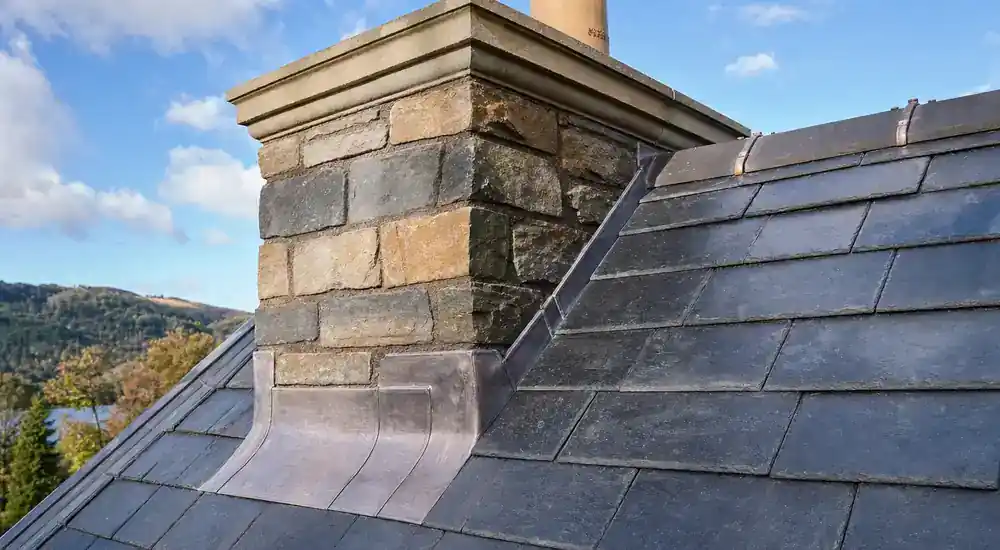
A stack combines masonry faces, joints, haunching, pots, lead aprons, stepped flashings, soakers and a back gutter. The surrounding slate or tile also matters. One wet face does not show whether water entered through pointing, the top of the stack or a roof junction.
Indoor staining, safe roof-void signs, rain direction and earlier repairs can help test the likely path. Some chimney faces may be inaccessible, and the flue interior sits outside a normal roof-level inspection. Those limits should remain clear rather than forcing one diagnosis.
Pointing, pot, haunching and leadwork are separate repairs
Local masonry work may suit open joints or isolated damage on an otherwise stable stack. Pots and haunching need their own condition and safety checks. Partial rebuilding should follow the extent and stability of the damage; possible structural movement may require a different professional.
Flashing, soaker and back-gutter work should be priced separately from pointing, even when one access setup serves both. Nearby slate or tile may also need attention. This separation makes it easier to see which part of the water path each repair addresses.
Older brick and stone may need compatible mortar
The existing brick, stone and mortar affect the pointing choice. Older masonry may need a compatible approach rather than a hard modern patch. Loose surfaces, crack patterns, open joints and the condition of earlier repairs help show whether work is local or needs broader masonry input.
Changing the joint finish, masonry, pots or stack appearance on a listed or conservation-sensitive building may need local authority advice. The heritage route considers the chimney alongside slate, lead and other traditional fabric.
External chimney repair is not a flue safety check
Roof-level repair concerns how the stack and its junctions resist weather. It does not test liners, draw, ventilation, appliances or combustion safety. An active, disused or shared flue can change what may safely be altered, but operation and fumes need the appropriate qualified specialist.
The purpose of caps, cowls, vents and pots should be understood before alteration because an appliance component is not simply a rainwater fitting. Shared stacks may also need ownership and responsibilities settled before work proceeds.
Safe access can affect the chimney repair cost
Ridge, party-wall and tall stacks present different access and protection needs. Height, pitch, fragile coverings, pavements, neighbouring land and conservatories can change the method. Access should suit both the inspection and the repair area rather than being guessed from one photograph.
Ground-level views from visible sides and safe indoor photographs may help before close access is arranged. Do not remove pots, covers or material for a better view. Shared ownership and an active flue can add coordination beyond the physical roof work.
What a useful chimney repair proposal should explain
The proposal should separate the stack faces, top, pots, joints, flashings, back gutter and adjoining covering. It should distinguish urgent make-safe work from likely water-entry repairs, routine maintenance and anything for a structural, flue or appliance specialist.
Ask which masonry, lead and covering items are proposed, what materials need matching and what remains hidden or inaccessible. Use the leadwork or heritage route when those decisions dominate. Check the exact scope, access and availability before making timing or access plans.
Decide what to check next for chimney repairs
Before choosing chimney repairs, note the visible defect, when it appears, nearby junctions and any safe indoor signs. If the cause remains unclear, request a roof inspection that distinguishes a local repair from a wider issue; do not climb onto the roof to investigate.