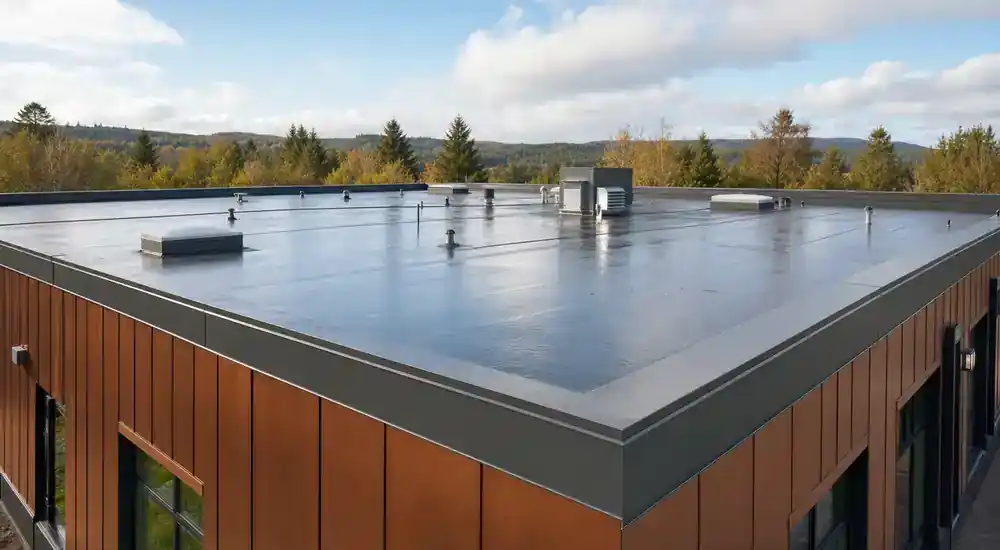
What single-ply roofing means
Single ply is a broad name for factory-made roofing membranes used with compatible seams, attachment, edges, outlets and accessories. Different membrane families are not interchangeable, so identification matters for both repair and alteration. These roofs are common on larger or technically detailed buildings, but suitability still depends on the individual roof rather than size alone. Smaller roofs can also use this approach when the deck, geometry and junction details suit the chosen system.
Attachment and wind resistance work together
A membrane may be mechanically fastened, adhered or used in another designed assembly. The deck, insulation, building height, roof edges and local wind effects influence how the system is restrained. Corners and perimeters can face different forces from the central roof area. Later plant work or new penetrations should not disturb attachment zones without understanding the existing design.
Seams and accessories are membrane-specific
Many single-ply systems use welded seams, with matching pieces at corners, pipes, rooflights, outlets and walls. A sound-looking central membrane can still leak at one of these interruptions. Visually similar sheets may react differently to heat, solvents or adhesives, so a repair should not begin with a generic patch or coating before the membrane is known.
Plant and foot traffic can change the fault pattern
Ducts, supports, maintenance routes and work by other trades can create punctures or stress near seams and penetrations. Repeated walking without suitable protection can also damage vulnerable areas. After other building work, the route to plant, dropped fixings, temporary supports, outlets and new penetrations deserve attention alongside obvious tears.
Repair, partial renewal or replacement
Small compatible repairs may be possible where damage is isolated and nearby attachment, insulation and deck remain sound. Water can travel within the build-up, so the damp area below may not sit under the opening. Broader seam faults, wet insulation, widespread damage or major plant changes can justify partial or full renewal rather than repeated patches.
The right next step for a single-ply roof
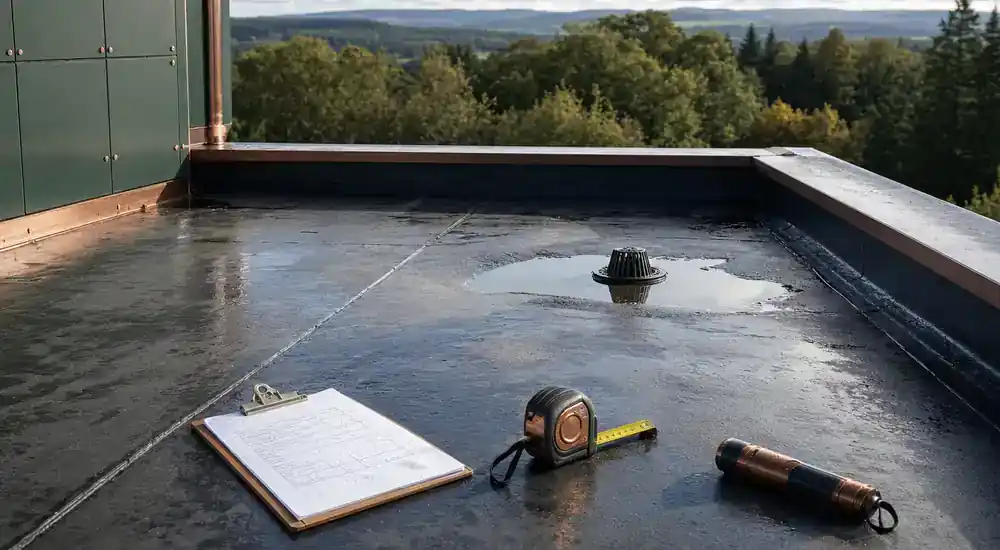
Membrane papers, roof plans and safe photographs can help establish the existing system and fault location. Do not apply heat, cut the sheet or climb onto the roof to identify it. A flat roof survey can clarify visible condition and inspection limits. The contact route can be used when a known concern or planned alteration needs discussion.
Decide what to check next for single ply flat roofing
Before choosing single ply flat roofing, note the visible defect, when it appears, nearby junctions and any safe indoor signs. If the cause remains unclear, request a roof inspection that distinguishes a local repair from a wider issue; do not climb onto the roof to investigate.