When a local flat roof repair may be enough
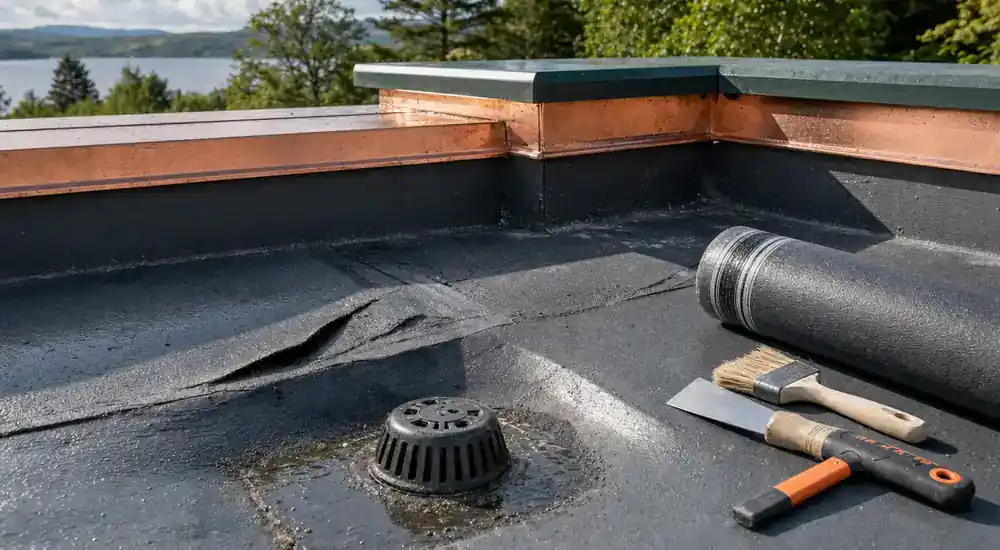
A limited puncture, open seam, loose edge or failed outlet detail may suit local repair when nearby material remains stable and the deck below shows no wider problem. The repair needs to match the existing covering and deal with the cause, not simply hide the visible split. Several old patches, damage across more than one area or a soft surface make another isolated patch less convincing.
Why the damp patch may not show the entry point
Water can move beneath a membrane, follow a deck joint or collect near insulation before appearing indoors. Check whether the leak changes with wind direction, prolonged rain or a blocked outlet. Rooflights, wall junctions, parapets, pipes, trims and previous repairs are common places where the main roof surface is interrupted. A repair aimed only at the point above the stain can miss the actual route.
Common faults across different coverings
Felt can split, blister or open at laps and edges. GRP can crack around movement points, deck joints or trims. EPDM can suffer punctures, seam faults or stressed terminations. Single-ply faults can involve welded seams, attachment zones or membrane-specific accessories. Coatings and old repairs sometimes hide the original material, so compatibility should be established before sealant, heat, adhesive or another patch is used.
Signs that the problem may be wider
Recurring leaks, moisture in several rooms, widespread cracking, many patches, persistent ponding or signs of soft decking can point beyond a single surface defect. None proves that full replacement is necessary. They do justify checking the membrane, drainage, insulation and deck as one roof system. Limited opening-up or moisture checks may be useful where concealed condition would change the repair choice.
How to compare repair quotations
A clear quotation should state the fault being treated, the repair area, compatible materials, work at edges or outlets and any deck or insulation allowance. Access, safe working, waste and internal making-good can change the total as much as the visible split. Check whether one price covers a surface seal while another covers removal of wet layers and reconstruction of the full detail before deciding which offers better value.
The next step for a leaking flat roof
Keep dated photographs of interior staining and any roof detail visible from a safe position. Note whether water appears during wind, heavy rain or long wet periods, and whether the same area has been repaired before. Do not walk on the roof or lean from a window. A survey route is more useful when the cause is uncertain; the contact route suits a known flat roof concern that is ready for discussion.
Decide what to check next for flat roof repairs
Before choosing flat roof repairs, note the visible defect, when it appears, nearby junctions and any safe indoor signs. If the cause remains unclear, request a roof inspection that distinguishes a local repair from a wider issue; do not climb onto the roof to investigate.