A tenement leak can involve several roof details
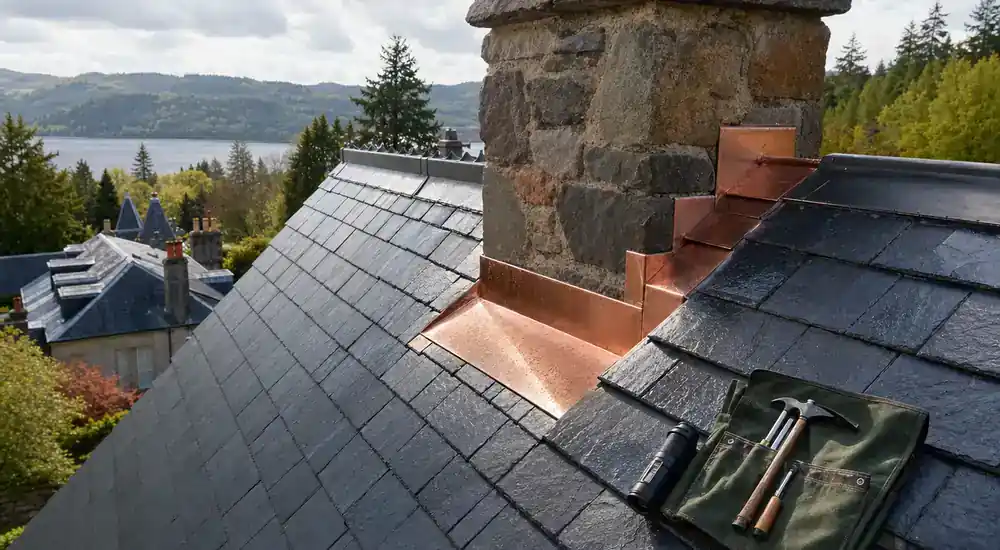
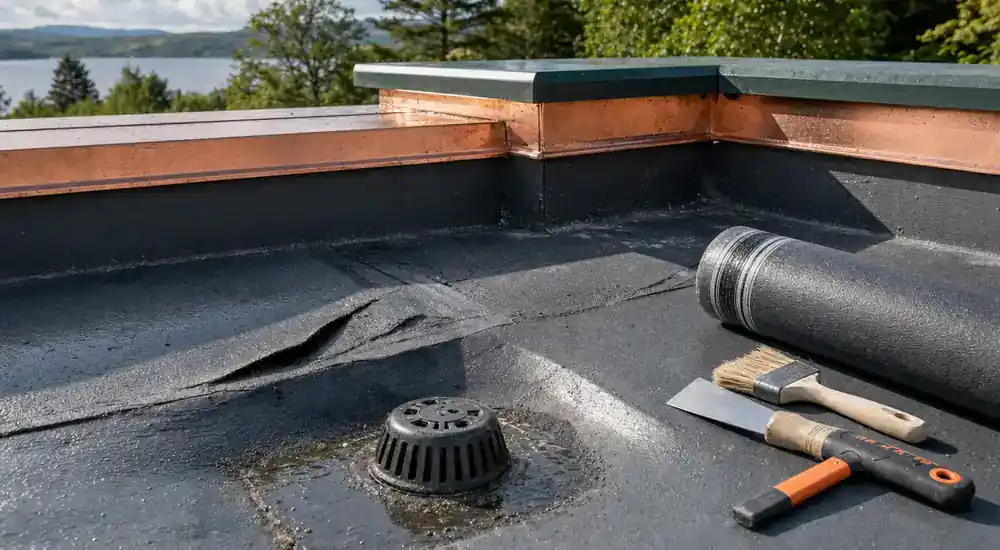
A top-floor ceiling mark may sit below slate, a valley, chimney, gutter or a small flat section, yet water does not always travel straight down. The affected room, common stair and weather pattern can help an inspection test more than one route. Another flat or shop below may show a related sign.
Repeated patches near one feature do not prove that feature caused the leak. When several junctions are possible, a roof survey can compare the covering, masonry, leadwork and rainwater path together and show which areas remained unseen.
Common-roof responsibility needs property paperwork
The roof of a divided Glasgow building may be a common part even when one occupier notices the problem first. A factor's correspondence, title-deed extract, earlier repair notice or owners' discussion can show how previous decisions were handled. The top-floor owner should not be assumed to control the whole job.
Scottish Government guidance explains that title deeds are the first place to look and that the Tenement Management Scheme may fill some gaps. It is general guidance rather than a ruling about a particular close, so legal or factoring advice may still be needed where owners disagree.
High elevations can make access the larger issue
A loose slate may be a small defect, but a street elevation, enclosed back court, lower extension or restricted lane can make safe access complex. Storey height, gates, basement areas, public paths, parked vehicles and occupied entrances all affect how close inspection or repair could be approached.
No owner should climb from a common window, use an unsecured ladder or enter an unsafe roof space for photographs. HSE roof-work guidance supports planned access and protection from falling objects. For active water entry, keep people clear and use the urgent safety guide first.
Slate, lead, chimneys and masonry work together
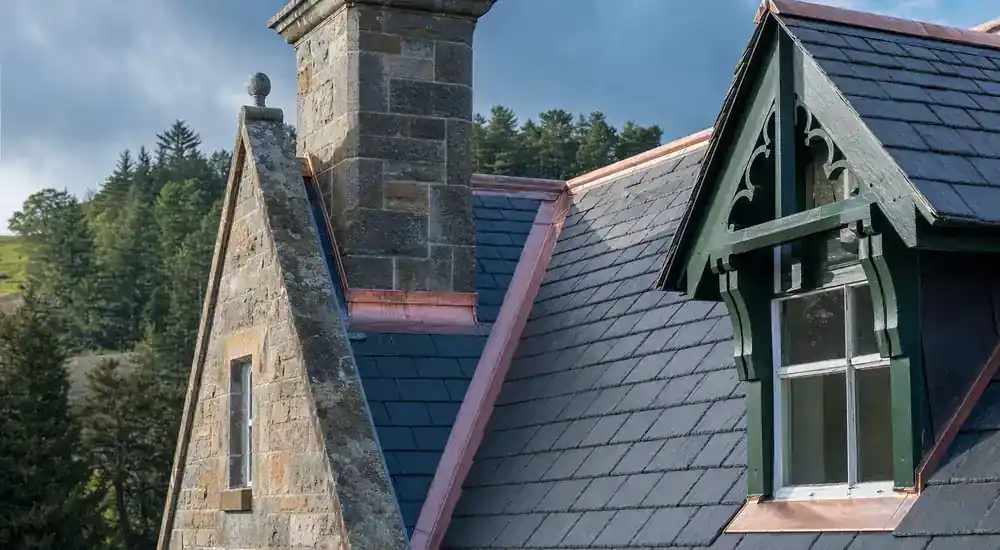
Replacing one slipped slate will not solve water entering through a lead junction, chimney, skew, valley or overflowing rainwater route. Traditional materials and nearby connections need to be considered as one weathering system. Sound material may be retainable even when one detail needs work.
If the building is listed or in a conservation area, check status before changing material or appearance. Historic Environment Scotland recommends asking the planning authority about work that may affect character. A repair name alone does not answer the permission question.
Repair and survey routes answer different questions
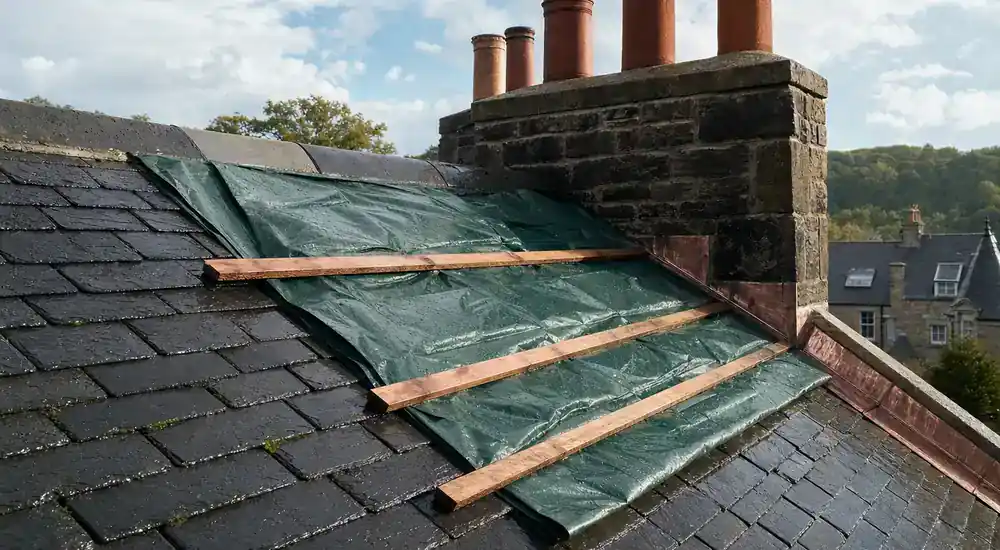
The repair guide suits a stable, known local fault. A survey is more useful when several roof areas could be involved, the condition of the whole slope matters or earlier work has not solved the problem. Immediate water control should remain separate from a lasting repair decision.
For a shared building, photographs tied to roof areas and rooms make options easier to discuss than a single whole-roof label. Any inaccessible valley, rear slope or chimney face should remain an inspection limit rather than an assumed defect.
Choose the next Glasgow roof decision
The full address, flat position, affected room, factor contact and dates of water entry are useful starting facts. Interior and street-level photographs can show the pattern without roof access. Earlier reports or repair descriptions can also help owners understand whether the issue is local or recurring.
Choose a repair route for a known local fault or a survey when the cause, extent or shared-roof condition is unclear. Before appointing anyone, check their service area, relevant tenement experience, proposed access, price and timing for this address.