Flat Roofing Repairs, Replacement and Installation

Compare flat roof repairs, replacement, installation, GRP, felt, EPDM, single ply and survey routes for Scottish properties.

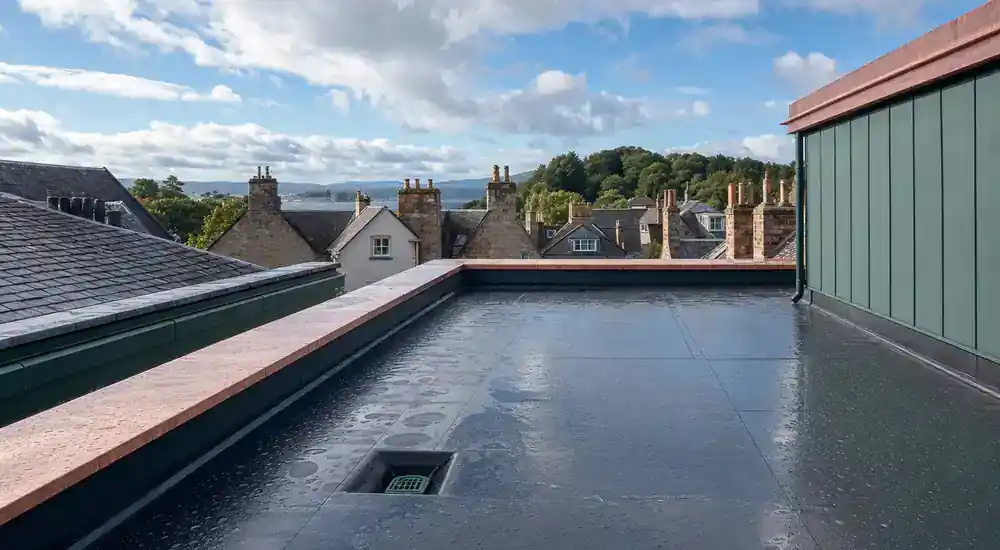
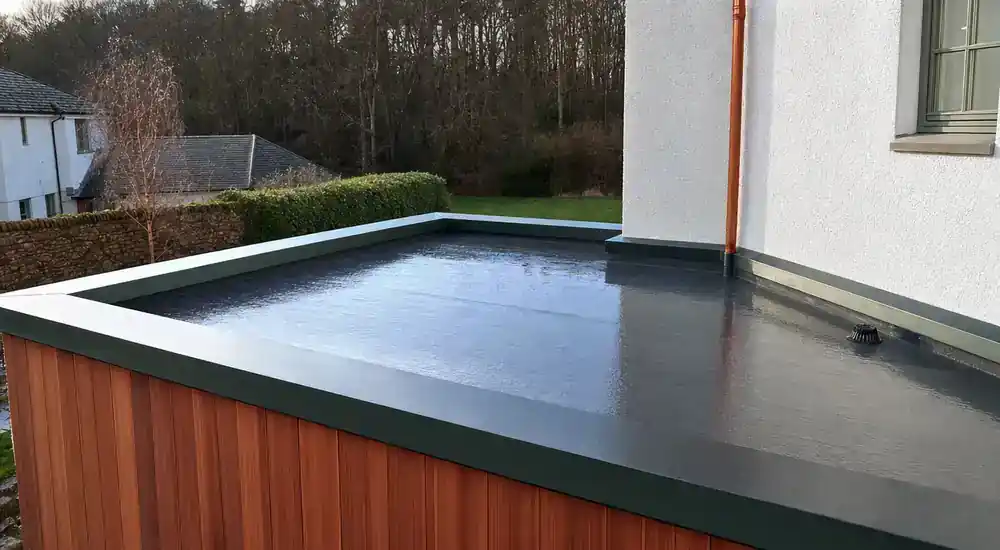
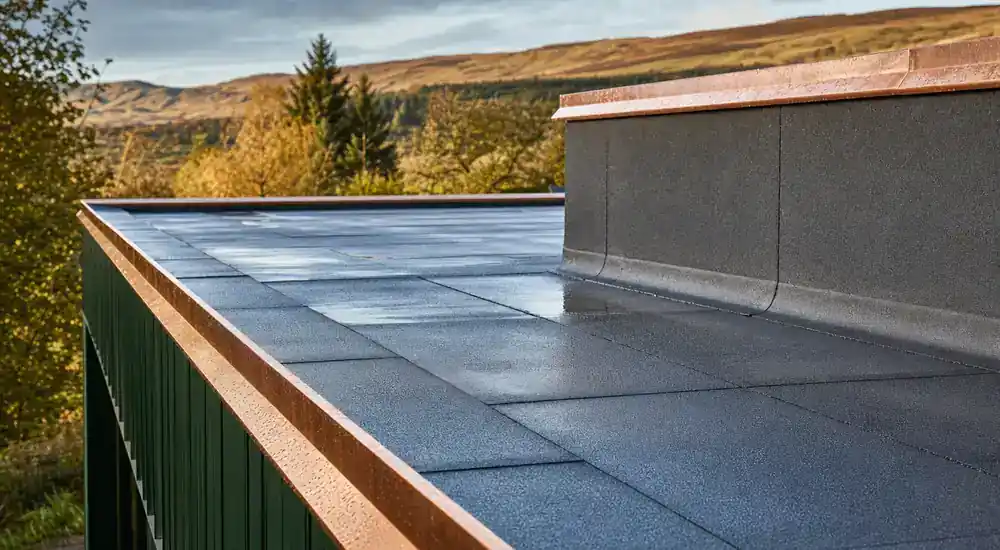
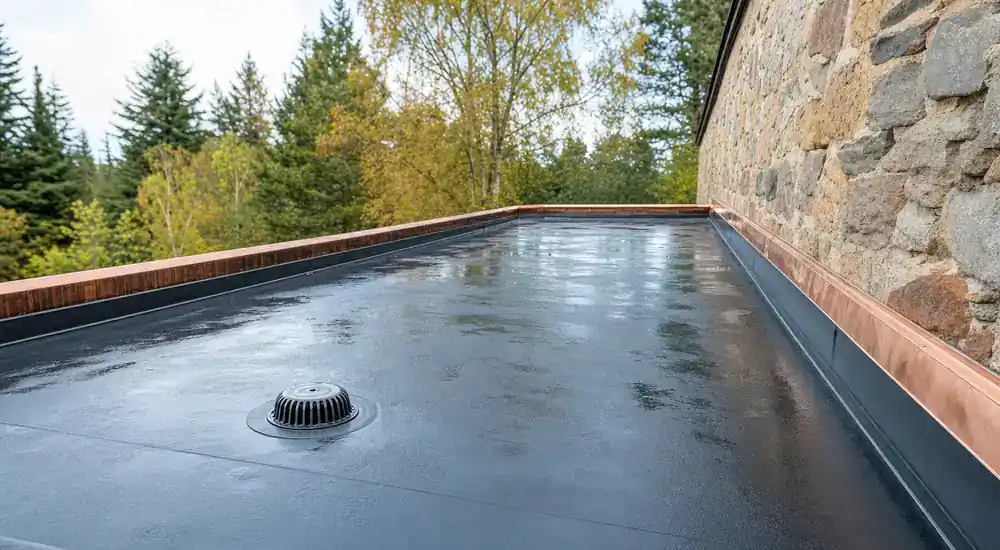
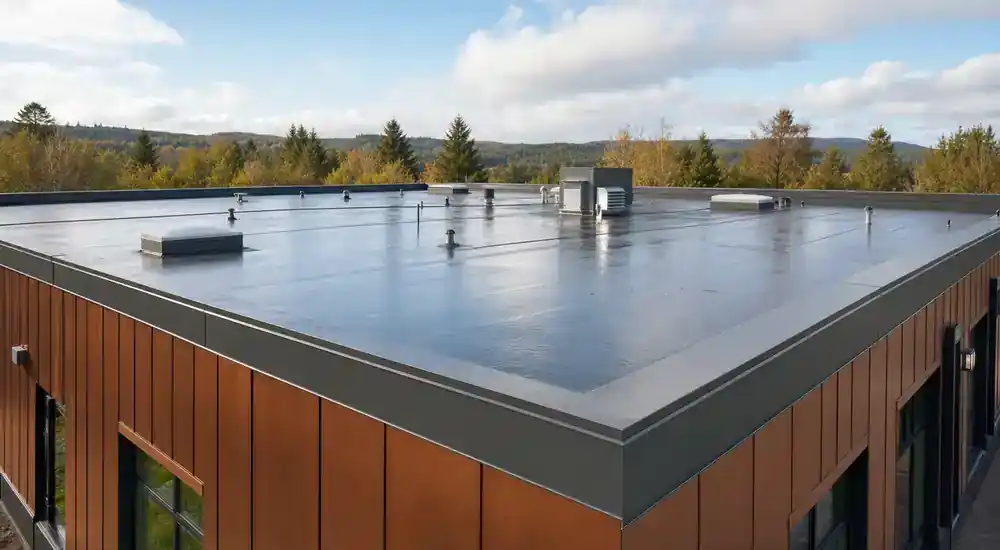
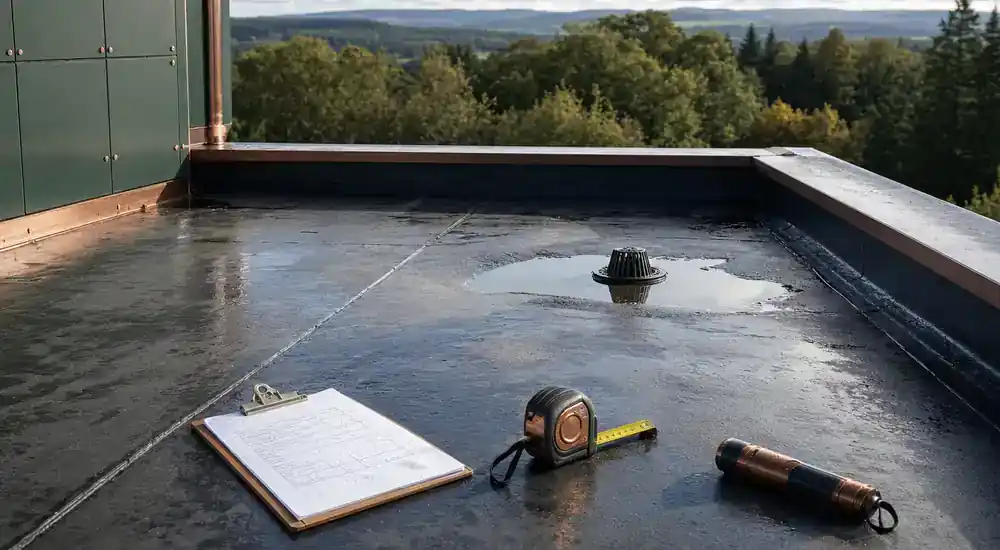
Bright flat roofing membrane and roofline detail in Scotland.

Start with the roof, not a material name

Flat roofing is a group of waterproofing build-ups rather than one interchangeable product. The useful starting point is the decision in front of you: trace an active leak, judge whether an ageing covering can still be repaired, renew a failed roof, specify a new roof or obtain condition evidence before committing to work. Roof size, deck, insulation, falls, outlets, edges, penetrations, access and how the area is used all shape that route. A material comparison only becomes useful after those constraints are understood.

Read the pattern of water and damage

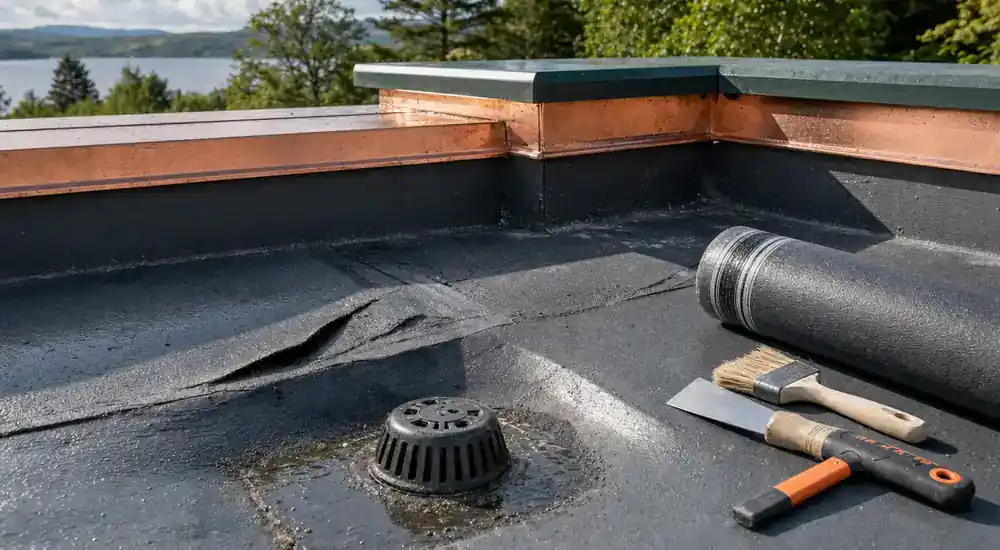
An internal damp patch does not identify the entry point by itself. Water may move beneath a covering, follow a deck joint or appear where the ceiling is easiest to penetrate. Useful clues include whether ingress follows wind-driven rain, whether it sits near an outlet, parapet, rooflight or abutment, and whether the roof shows blisters, splits, loose edges, punctures or persistent ponding. Record observations from a safe position and keep the leak history separate from assumptions about the cause.

Decide between repair, overlay and replacement

A targeted repair is worth assessing where a defect is isolated and the surrounding build-up remains serviceable. An overlay adds another covering above retained layers, but it should not be treated as a shortcut around wet insulation, an unsound deck, incompatible materials or unresolved drainage. Replacement allows failed layers to be removed and details to be redesigned, yet it should follow evidence rather than roof age alone. The scope may require limited opening-up before hidden moisture and deck condition can be judged.

Explore flat roof repairs

Choose a system around the roof's constraints

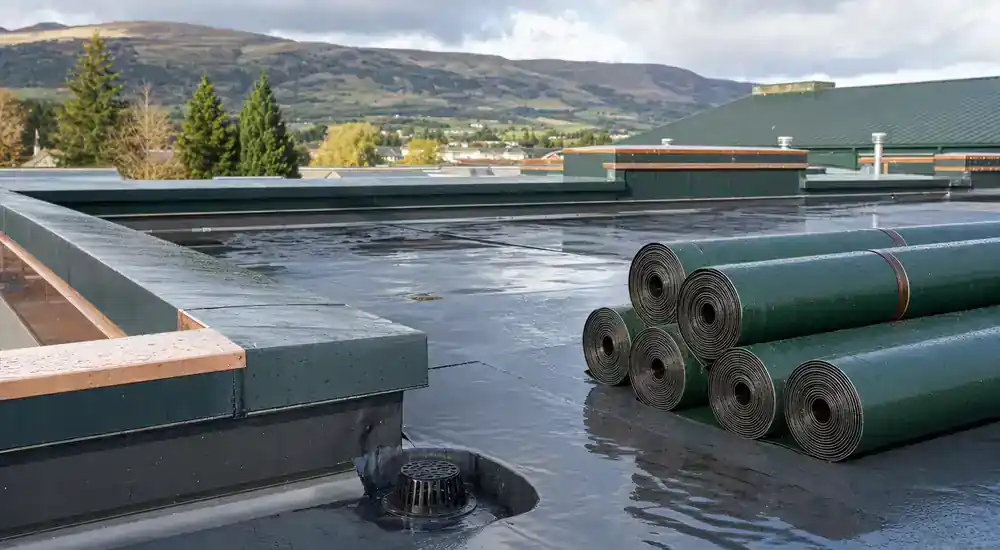
GRP forms a rigid laminated waterproofing surface and depends heavily on a stable, suitable substrate. Reinforced bituminous felt uses a layered specification with laps and a cap sheet. EPDM is a flexible rubber sheet system whose seams, adhesives and terminations need compatible detailing. Single-ply membranes are designed with a particular attachment method, seam treatment and component set. None is universally best. Geometry, movement, substrate, roof traffic, fire and thermal design, drainage, future access and manufacturer requirements all belong in the comparison.

Compare replacement options

Coordinate deck, insulation and waterproofing

The visible membrane is only the upper part of the roof. Below it may sit a deck, vapour control layer, insulation and supporting structure, arranged according to the chosen roof design. Renewal or installation is the point to ask how condensation risk, thermal performance, compatible fixings or adhesives and changes in finished height will be resolved. Upstands, thresholds and rooflight kerbs can become constrained when insulation is added, so the whole build-up should be specified together rather than treating waterproofing as a surface-only purchase.

Make drainage and junctions part of the specification

Flat roofs still need planned falls and clear routes to rainwater outlets. The assessment should consider low spots, outlet position and capacity, overflows where relevant, leaf or debris traps and whether water is being held behind a trim or upstand. Edges, parapets, abutments, pipes, rooflights and changes of level concentrate detailing into small areas; they deserve the same attention as the main field of the roof. A covering selected without workable junction details is not yet a complete roof specification.

Use a survey to turn uncertainty into a scope

A useful flat roof survey states what was accessible, what could be seen and where further investigation may be needed. It should identify the apparent covering, map visible defects and water paths, record outlets and junctions, relate internal signs to external details where possible, and separate immediate weatherproofing from planned work. Ask for observations to be distinguished from likely causes. That gives repair and replacement quotes a shared starting point instead of asking different contractors to price different assumptions.

Prepare a useful flat roof enquiry

Share the property type, roof location, approximate dimensions if known, current use, access constraints, covering type if documented, leak dates and any previous repair information. Add photographs taken from the ground, an ordinary window or inside the property, but do not climb onto the roof to gather them. State whether the enquiry concerns diagnosis, repair, replacement, a new installation or a written condition record so the next conversation begins with the right scope.

Frequently asked questions

Which flat roofing page should I start with?

Choose repairs for a specific defect, replacement for whole-roof renewal, installation for a new roof, a material page for system selection, or surveys when the cause or extent is still uncertain.

Does a leak mean the whole flat roof needs replacing?

Not necessarily. The decision depends on the defect, surrounding membrane, deck, insulation and drainage. An assessment may also need limited opening-up where concealed layers cannot be judged visually.

Can I compare GRP, felt, EPDM and single ply by price alone?

A useful comparison also covers substrate, geometry, details, attachment, roof use, access, insulation, drainage and the scope included in each quotation.

What should I send with an enquiry?

Send safe photographs, leak history, roof location, access notes, previous work information and the decision you need help with. Do not go onto the roof solely to collect evidence.

Need a flat roof inspected?

Send the roof type, access constraints and leak history so the enquiry can be reviewed for the most relevant next step.

Request an assessment

Tell us what you have noticed

Six short steps collect the details needed to route your enquiry. Stay at ground level and never climb onto a roof to gather information.

Step 1 of 6