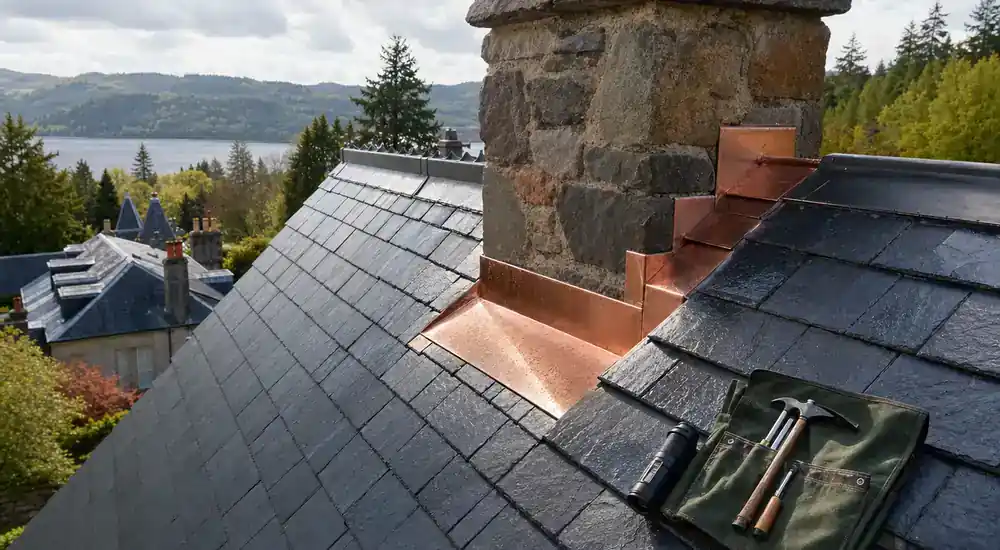
Worker using secured access equipment on a pitched roof.

Scottish roofing help for repair decisions

Start with what you can safely see. Compare repair, flat and heritage routes, then send the property details needed for an informed assessment.

Separate the symptom, roof system and decision

A ceiling mark is a symptom, not a repair specification. Its source may sit at a covering, valley, chimney, outlet, parapet, wall junction or concealed part of the build-up. Start by recording the affected room or elevation, when the sign changes and which roof details are nearby. Then choose the route for the known roof system, or an inspection route when the construction or source remains uncertain.

The decision also matters. Tracing active water entry, documenting overall condition, comparing repair proposals and preparing a consent question need different evidence. Naming that decision prevents a small visible sign from becoming an unsupported whole-roof diagnosis and helps the same observations remain useful across later conversations.

Build one evidence pack before comparing proposals

Keep safe photographs, dates, weather, affected rooms, previous reports and repair records together. Add the postcode, property type, storey height, building use, known roof material and access constraints. For shared, occupied or protected buildings, include the factor or facilities contact, known designation and the approval decision that still needs to be made.

A consistent pack makes quotations and survey findings easier to compare because each response starts from the same roof area and question. It should distinguish observed facts from assumptions, identify inaccessible areas and keep temporary protection separate from the permanent repair scope. No ladder, roof hatch or fragile surface is needed to prepare it.

Know what an online roofing guide cannot confirm

These pages can explain repair routes, material questions, inspection evidence and local property context. They cannot confirm the cause of a defect, the condition of concealed layers, a final specification, planning consent, price, attendance time or contractor availability for an address. Those points depend on the evidence, safe access and the operator connected to the enquiry.

Use the assessment form when the next useful step is clear enough to describe. State what is unknown and what outcome you need rather than selecting a product or promising access. That boundary keeps the enquiry practical while leaving diagnosis, permissions and commercial commitments to the appropriate review.

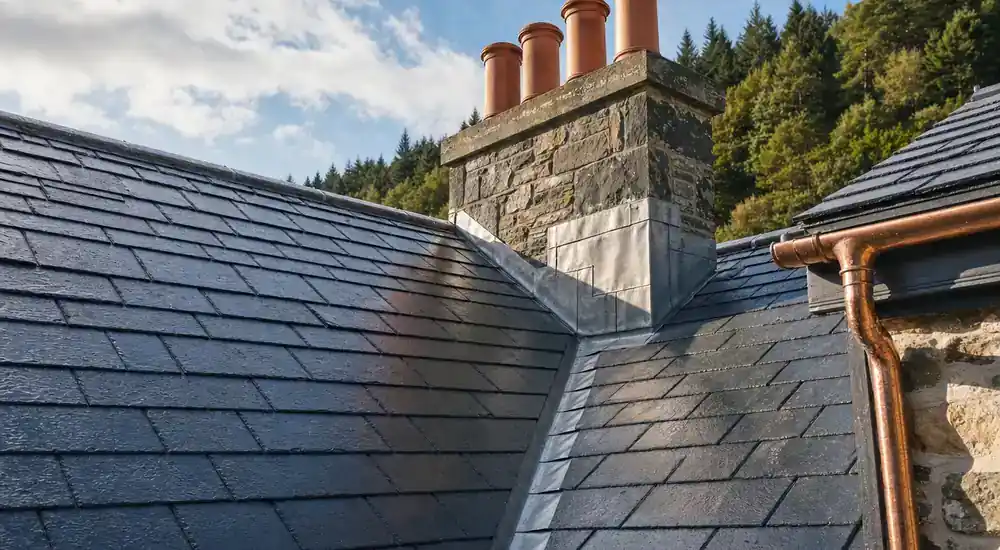
Slate roof and chimney junction showing roof-covering and flashing details.

Begin with the symptom, not an assumed diagnosis

A ceiling mark, slipped covering, overflowing gutter or damp chimney breast can point to different parts of the roof. The visible sign alone may not confirm the cause.

Choose the route that best matches what you can safely observe. Use the inspection route when the overall condition, source of water entry or appropriate service remains unclear.

  • Record where the sign appears and when it changes.
  • Name the roof type only when it is already known.
  • Keep all observations to safe interior, ground-level or normal-window viewpoints.
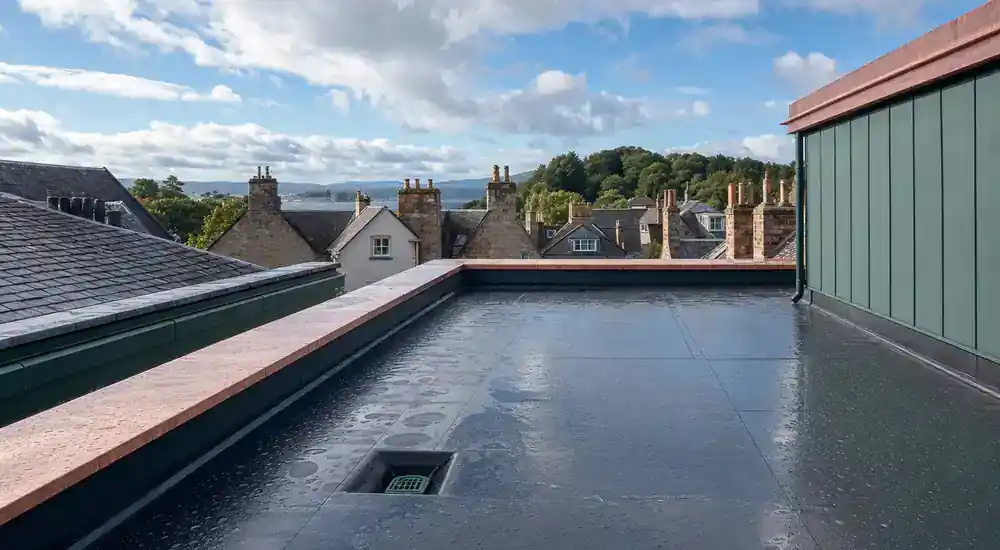
Flat roof membrane, outlet and edge detail being inspected.

Read the membrane, deck and drainage as one roof system

Ponding water, failed outlets, split membranes and tired edge details can overlap. The repair question starts with how the surface, deck and drainage work together.

The flat roofing hub helps visitors compare repair and replacement routes, understand common failure points, and choose between GRP, felt, EPDM and single ply systems.

A useful brief separates what was observed from what still needs inspection, then records drainage, deck condition, outlets and edge details before a repair route is selected.

Traditional slate, leadwork and stone roof details on a Scottish heritage building.

Keep fabric, consent and repair scope in the same decision

Traditional roofs need careful inspection before materials are disturbed, especially on listed buildings, churches, conservation properties and older Scottish slate roofs.

Repair planning looks at slate, lead, lime mortar, chimney detailing and survey findings before historic roof fabric is disturbed.

The focus is careful, conservation-aware roof repair for older Scottish buildings where materials, appearance and weathering details matter.

How to prepare and route a roofing enquiry

Six focused steps collect the concern, safe observations, property context and contact details without asking you to diagnose the roof.

  1. 01

    Observe safely

    Record interior signs, ground-level debris or a view from a normal window. Never climb to gather evidence.

  2. 02

    Add property context

    Share the postcode, building type, affected area and access or parking notes you already know.

  3. 03

    Describe the timeline

    Explain what changed, when it appeared, relevant weather and previous work without assuming the cause.

  4. 04

    Define the next decision

    State whether you need leak tracing, condition evidence, a repair scope or consent-aware preparation; attendance and availability remain unconfirmed until review.

Useful records before a roofing assessment

These guides help organise safe observations and questions. They are not completed-project claims or a substitute for assessing the roof.

Read roofing advice
Scottish rooftops and varied property types used to explain local repair and access contexts.

Compare roof repair context by Scottish location

Ten guides compare shared ownership, exposure, access, protected fabric and property-use questions. They organise an enquiry; they do not claim blanket contractor coverage.

Compare area guides

Questions before an assessment

Practical answers about choosing a route, gathering information safely and sending an enquiry.

Which roofing route should I choose?

Choose the route that best matches the visible sign. If the cause or overall roof condition is unclear, use roof inspections and surveys or select something else in the assessment form.

Should I go onto the roof to check the problem?

No. Use safe interior, ground-level or normal-window observations. Do not use a ladder, access hatch or adjoining roof solely to gather information or photographs.

What happens after an assessment enquiry?

The submitted concern, property context and contact details can be reviewed to decide whether more information, an assessment or another route is appropriate. The form does not promise a diagnosis, price or attendance time.

Describe the roof concern safely

Share safe observations, property context and contact details so the appropriate assessment route can be considered.

Tell us what you have noticed

Six short steps collect the details needed to route your enquiry. Stay at ground level and never climb onto a roof to gather information.

Step 1 of 6