A postcode is only the starting point
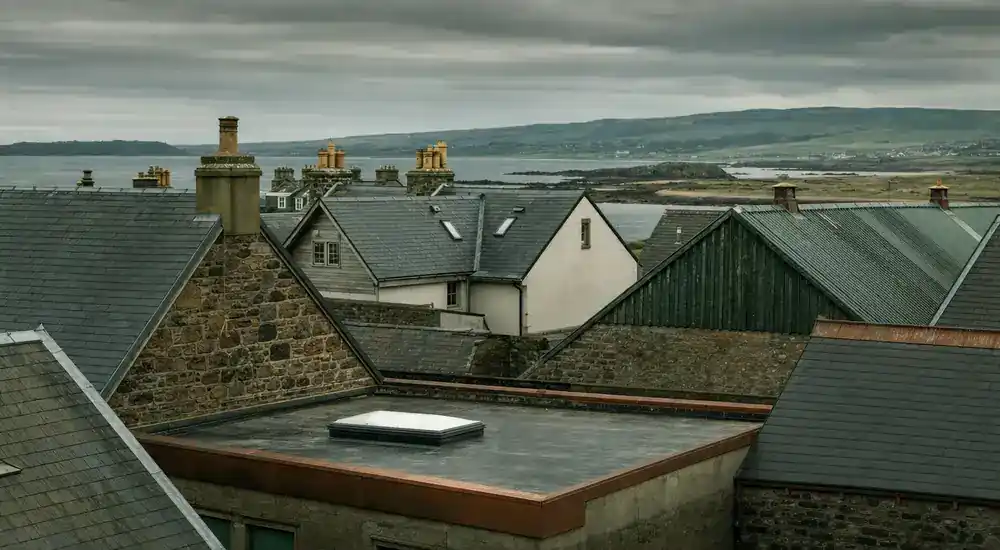
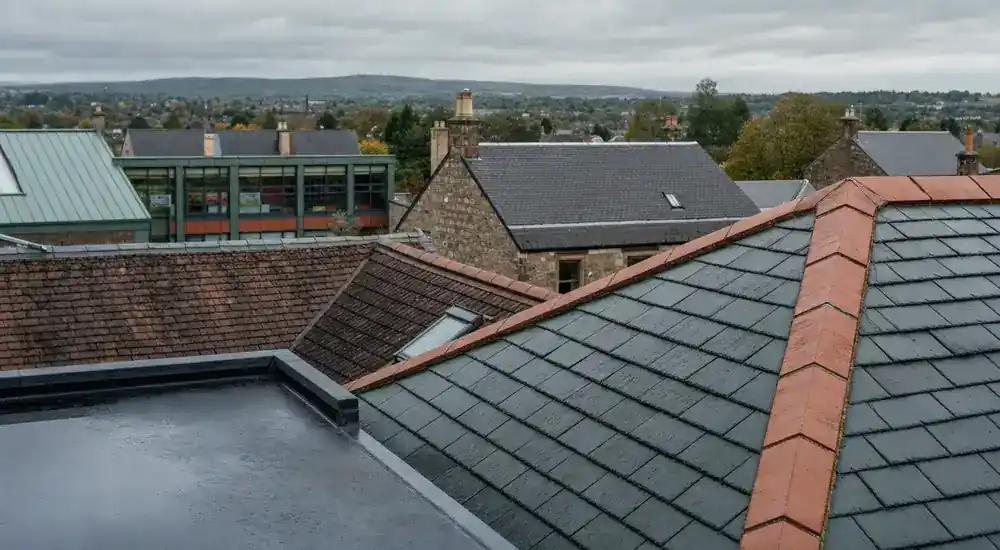
A top-floor tenement, detached home, shop with flats above it, rural outbuilding and large flat-roofed premises can face very different roof decisions in the same council area. Building use, height, roof type, ownership and the spaces below the fault matter more than a town name on its own.
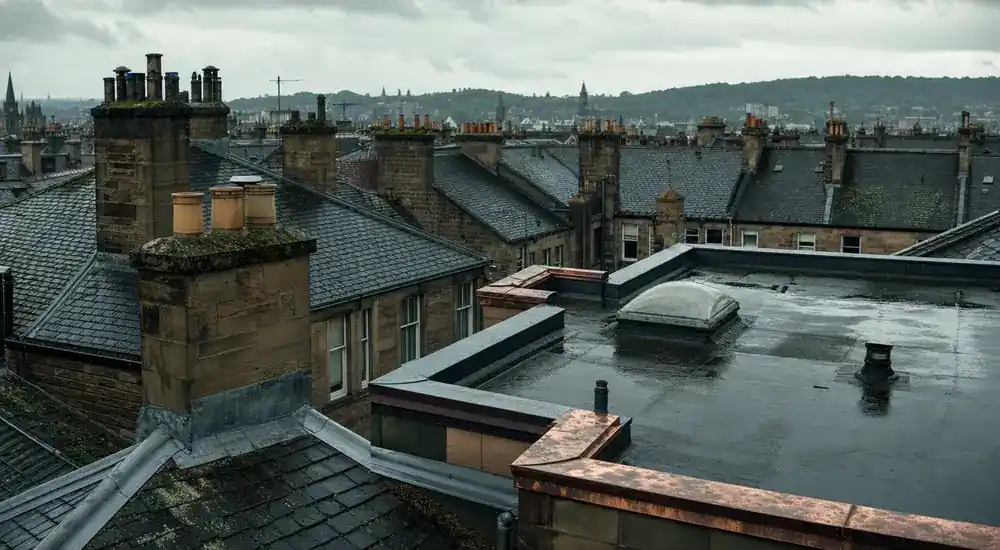
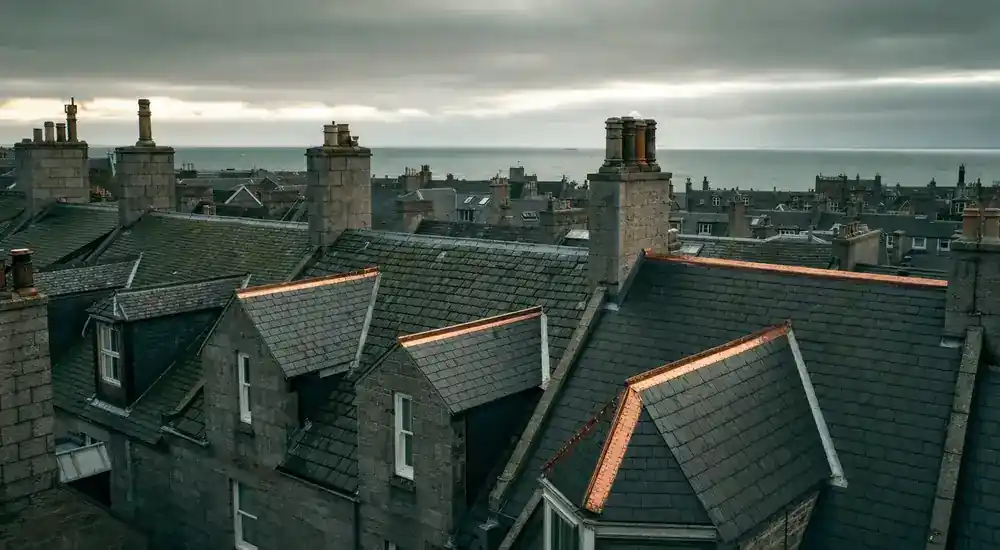
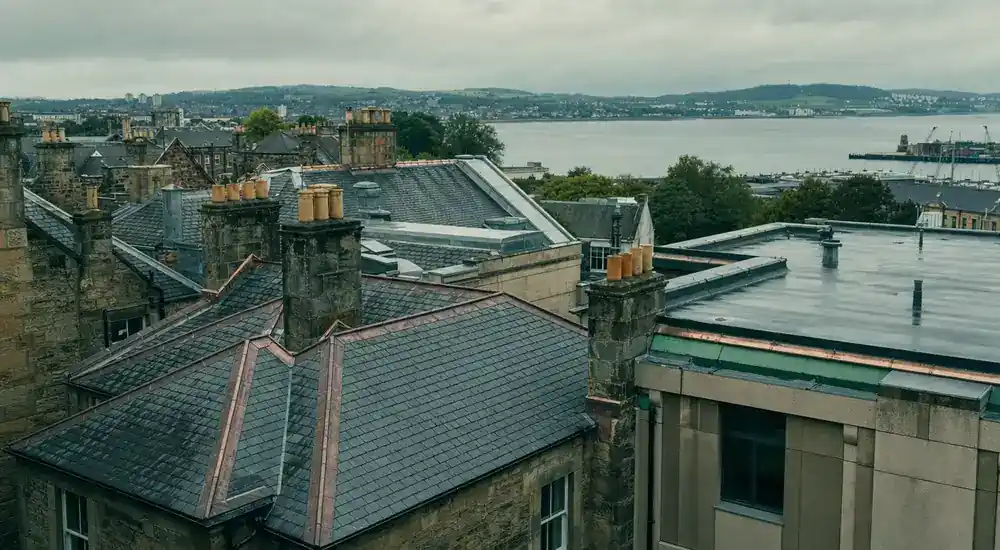
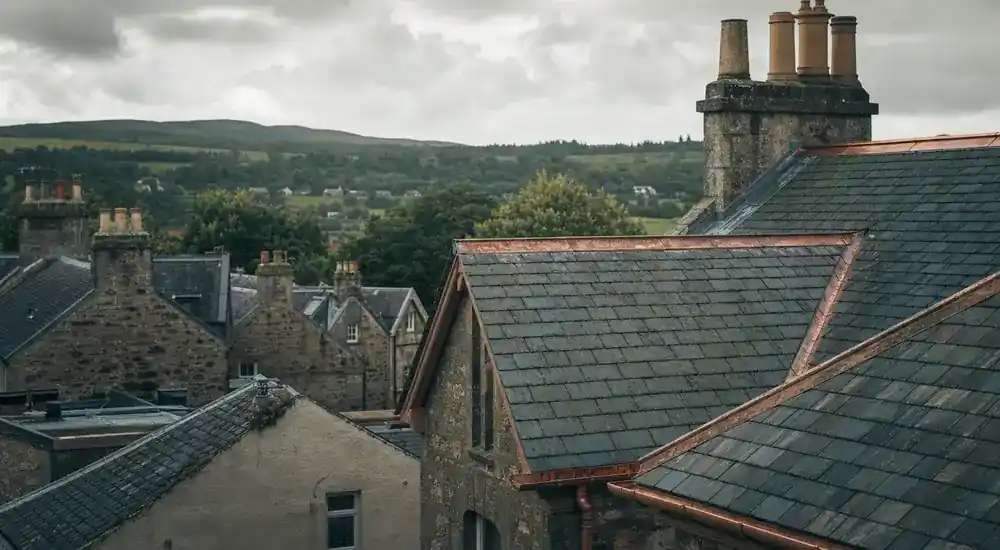
Each guide highlights a distinct property setting. Glasgow and Edinburgh focus on shared roofs and high access; Dundee links upper and lower roof levels; Falkirk considers domestic and sheeted premises; Perth, Stirling and Inverness add town, rural and changing-ground questions. Use only the points that fit the actual property.
Shared roofs can involve more than one owner
A leak inside one flat does not necessarily make that household solely responsible for the roof. Title deeds, factoring arrangements and common-repair paperwork can affect how owners make decisions. The Scottish Government explains how title deeds and the Tenement Management Scheme relate to common parts, but only property-specific advice can settle a dispute.
One shared defect list and a single set of dated photographs can make discussion easier for owners without forcing anyone to diagnose the cause. Keep urgent water control, inspection findings and permanent work as separate choices so a temporary action is not mistaken for an agreed full repair.
Historic roofs need an address-specific permission check
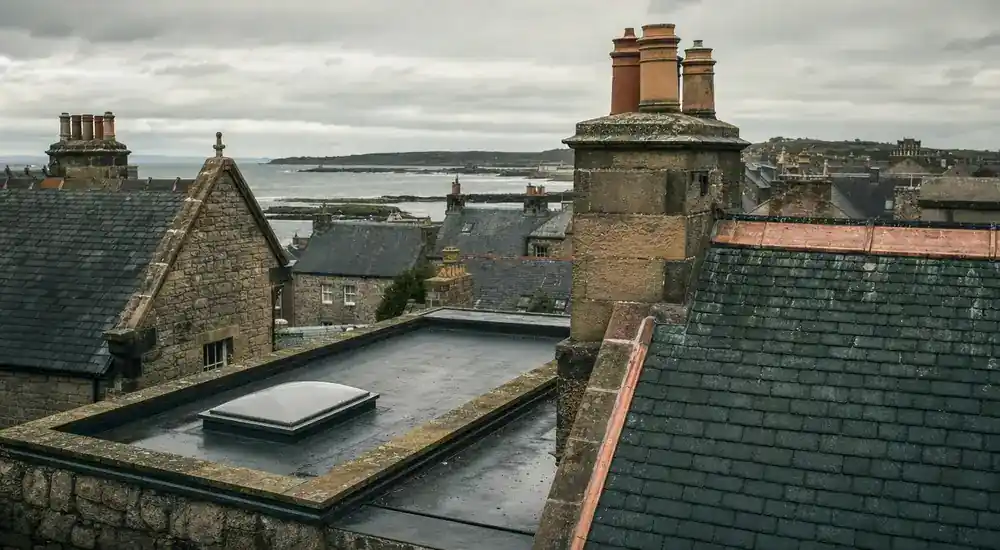
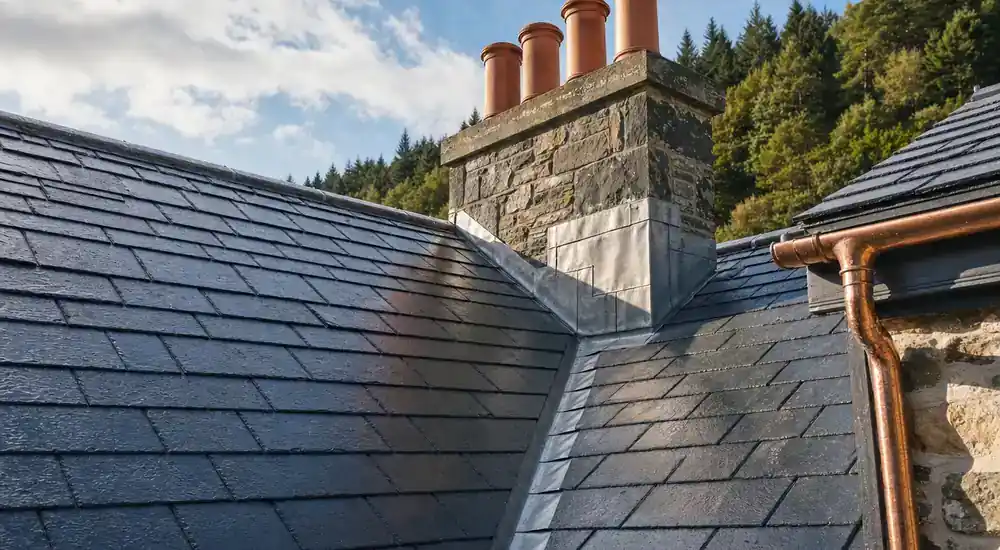
Traditional slate, lead, chimneys, skews, mortar and rainwater goods can contribute to a building's character. A change described as repair may still need permission when material, appearance or significant detailing alters. Listing and conservation status must be checked for the exact address.
Historic Environment Scotland advises contacting the planning authority where work may affect a protected building or area. The local guides link to relevant council information where it is available. Confirm the proposed change before ordering replacement materials or assuming that a familiar modern detail is like-for-like.
Urban, coastal and rural access bring different risks
A small visible fault can still sit above a pavement, enclosed court, extension, steep slope, fragile sheet or occupied workplace. Front and rear ground levels, locked gates, public entrances, narrow tracks, rooflights and overhead lines can all change the safe access options. Do not climb or walk on a roof to fill a gap in the information.
The Health and Safety Executive says roof work must be planned and that fragile surfaces need particular care. Indoor, ground-level and normal-window photographs are enough for a first conversation. The suitable equipment and method depend on the building and task, not on the size of the loose slate or split seen from below.
The visible sign points to the next guide
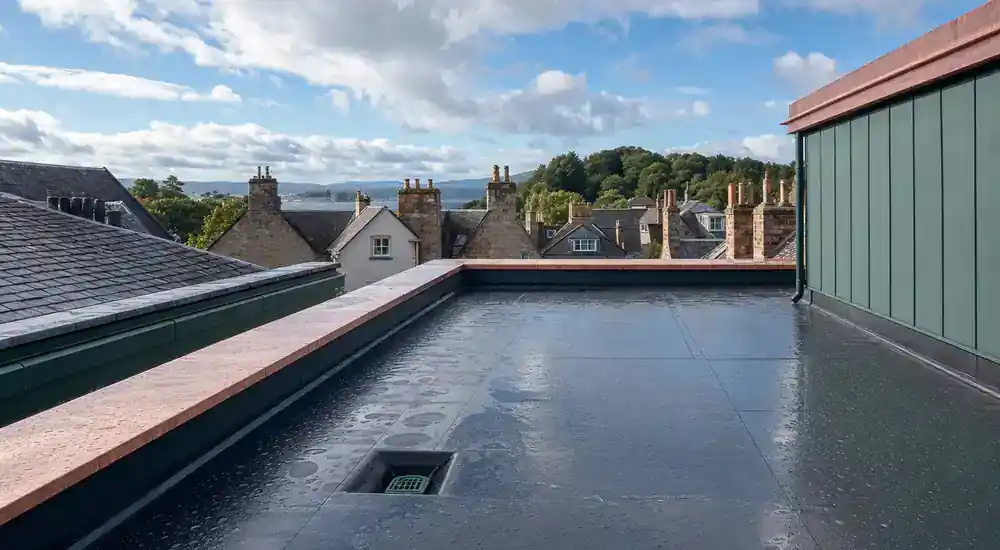
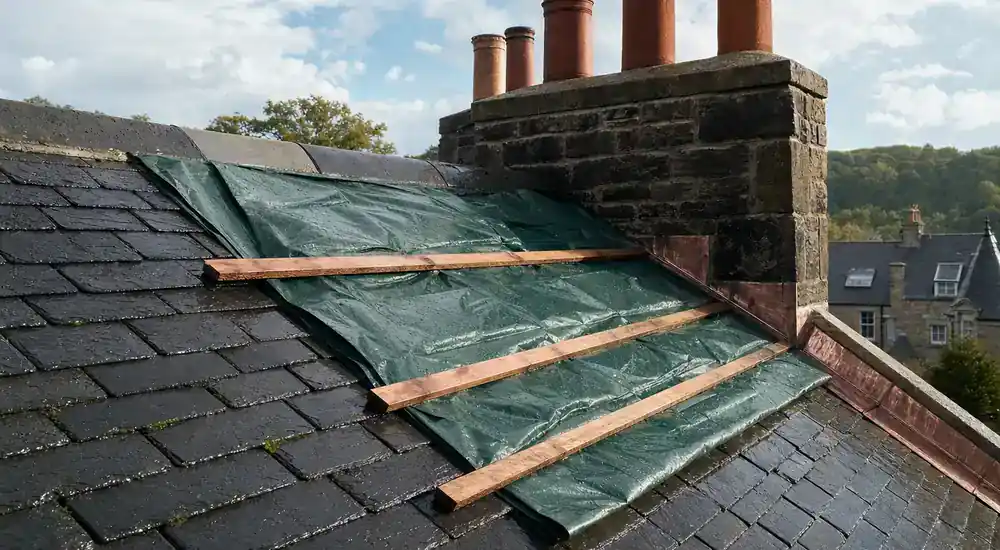
Active water entry or falling material needs safety-first guidance. A stable local fault may fit the general repair guide. Flat membranes, outlets and edge faults have their own route, while traditional roofs may need the heritage guide. A survey is often the better starting point when the cause is unclear or previous patches have not solved it.
Water can travel along underlay, timbers, masonry or a lower roof before it appears indoors. A ceiling mark therefore helps locate the affected room but does not prove which component failed. Keep people safe, note the pattern from an ordinary viewpoint and choose the guide that matches the decision rather than a guessed diagnosis.
Check the company and proposal for the exact address
Use each page for its property, ownership, planning and access context. Before choosing a roofer, check the company's current service area and experience with the relevant roof, building and access conditions. Council and Historic Environment Scotland guidance supports the property decision; it is not evidence about a contractor.
Describe the address, building type, visible problem and any immediate safety issue, then compare what each proposal says about diagnosis, access, repair scope, price and timing. Keep anything omitted or unknown open rather than assuming it is included.