What a flat roof survey can help you decide
A survey can investigate a leak, check visible condition, compare a proposed repair with wider renewal or look at a roof before other building work. The most useful outcome is a clear answer to the decision you face: whether a local fault is likely, which areas need attention first and what remains uncertain. It should not promise certainty about layers that cannot be seen.
When a condition check is especially useful
Repeated leaks, several old patches, no obvious entry point, suspected soft decking or a planned replacement can all justify a closer look. A survey can also help before adding plant, changing an outlet or carrying out work that may affect the membrane. Immediate danger from falling material, unstable ceilings or water near electrics needs the appropriate emergency route first.
The roof areas that may need checking
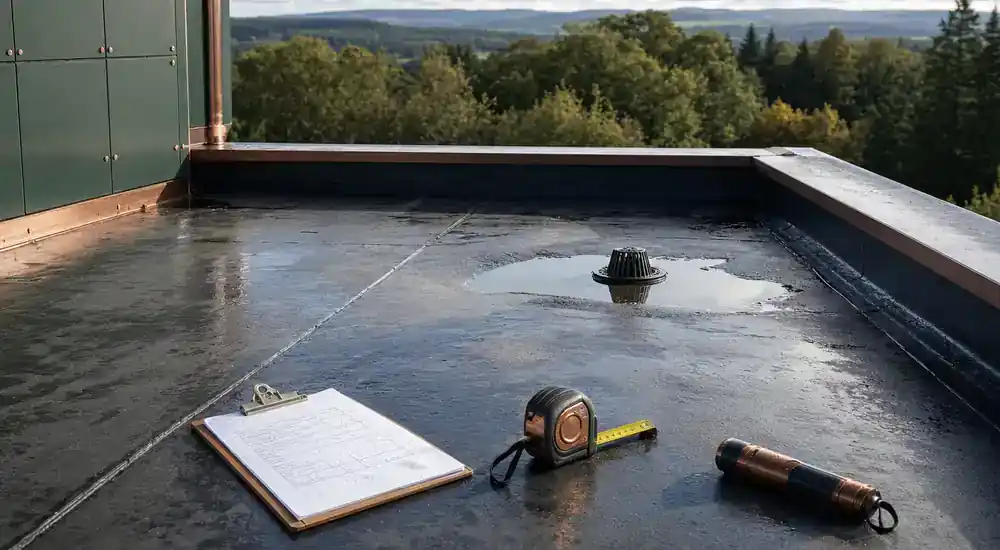
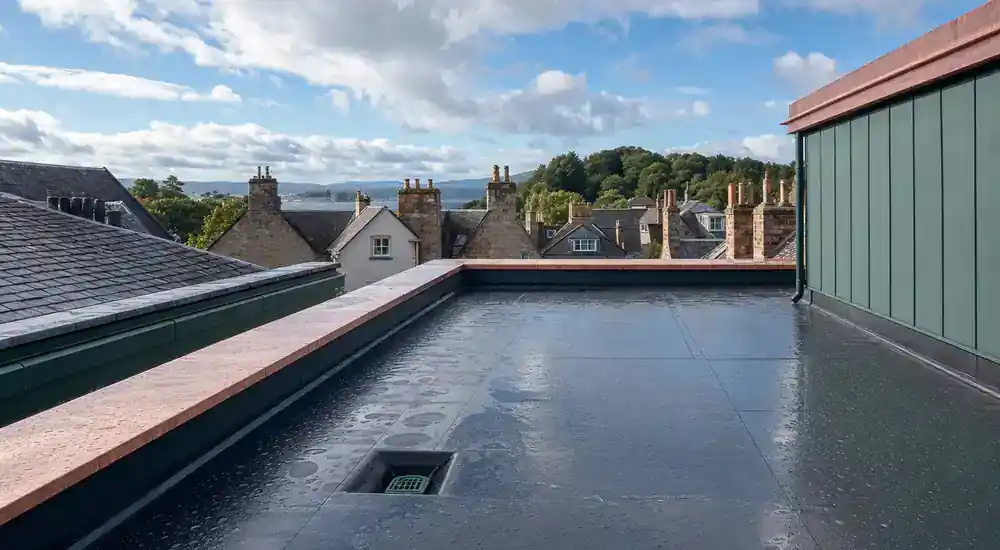
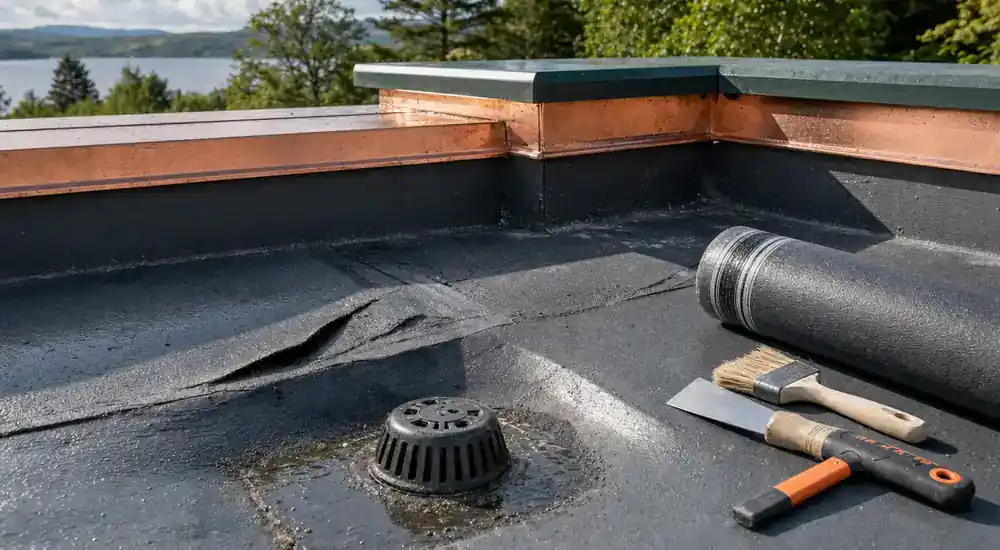
A flat roof condition check can look at the visible membrane, old repairs, seams, edges, parapets, rooflights, pipes, outlets, low points and changes of material. Interior staining and accessible rooms below can help test possible water paths. Access method, weather and concealed construction affect what can be seen, so findings should make those limits clear.
What useful findings look like
Clear findings locate visible faults, connect photographs to roof areas and distinguish observations from likely causes. Priorities can separate immediate precautions, local repair, maintenance, further investigation and replacement choices. Where more than one option remains credible, the report should explain what each would solve and what new information could change the decision.
Why concealed layers may remain uncertain
A visual survey cannot always confirm deck strength, insulation moisture or the exact route of intermittent water entry. Targeted opening-up or moisture investigation may be worthwhile when the result would change the repair choice. Any intrusive check should have a clear purpose and a way to close the roof safely afterwards. Dry weather can also hide a fault that appears only during particular wind or rain.
From survey results to the next step
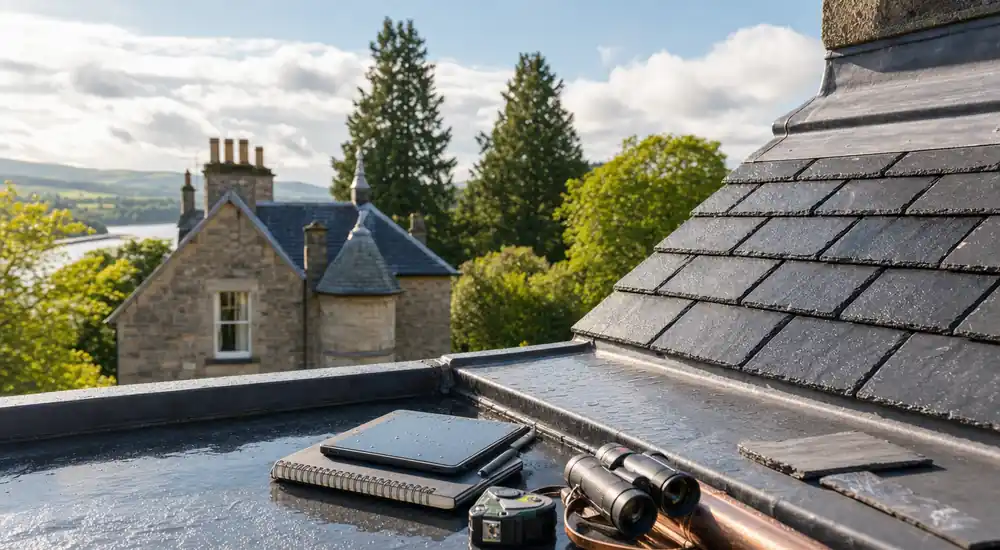
The results can support a focused repair quotation, a replacement comparison, monitoring or a specialist question about structure, condensation or another building element. Existing roof papers, leak dates and safe photographs may help before the visit, but no one should climb onto the roof solely to gather them. Before making plans, agree the survey format, access, written output, price and timing for the actual roof.
Decide what to check next for flat roof surveys
Before choosing flat roof surveys, note the visible defect, when it appears, nearby junctions and any safe indoor signs. If the cause remains unclear, request a roof inspection that distinguishes a local repair from a wider issue; do not climb onto the roof to investigate.