Start with the problem, not a trade term
A ceiling stain, slipped slate, overflowing outlet or damp chimney breast does not always reveal where water entered. It is usually more useful to begin with when the problem appears, the room or roof area affected and whether wind or heavy rain changes it.
The service routes then separate urgent safety, a stable local repair, a flat-roof problem, traditional or listed fabric, and an inspection where the cause remains uncertain. This gives you a clearer starting point without asking you to specify the work yourself.
Know when an inspection is the better first step
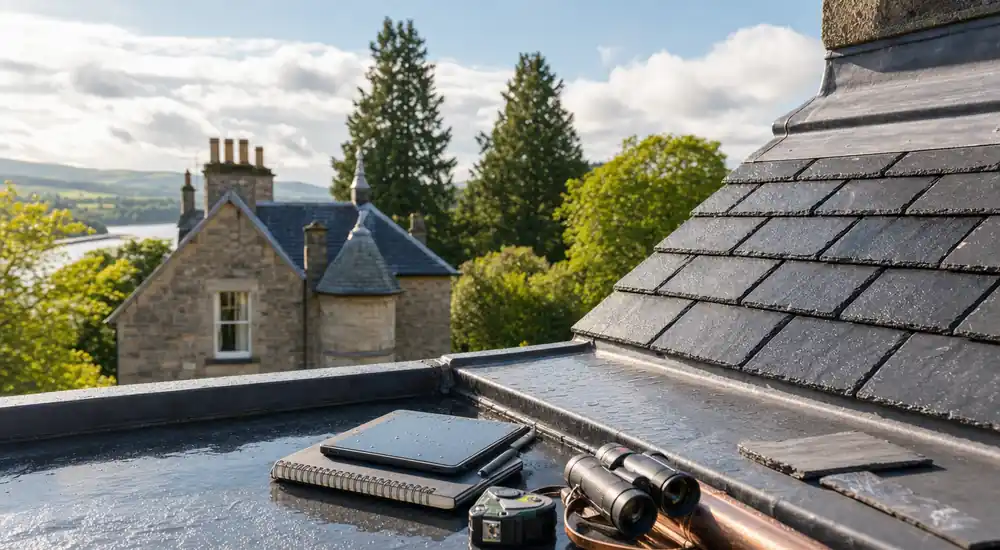
Choose an inspection before repair when leaks return after earlier work, several roof areas may be involved, the covering is not known, or the decision needs condition findings rather than a quick visible fix. A useful inspection separates direct observations from likely causes and records what could not be seen.
The outcome should help you compare a local repair, staged maintenance, further investigation or wider renewal. It should not turn one photograph into a guaranteed diagnosis or use concealed damage to justify an undefined scope.
Flat and traditional roofs need different questions
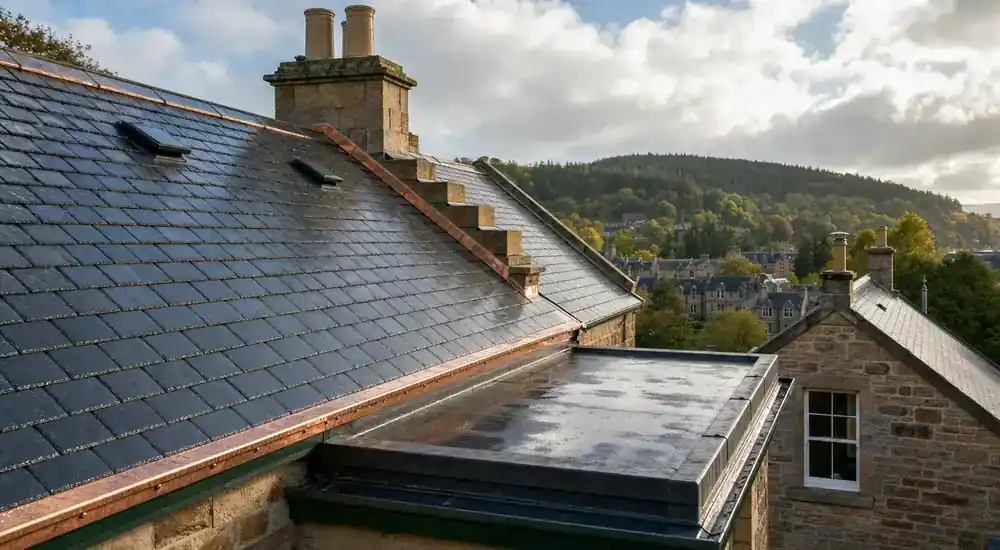
A flat roof needs the surface, deck, insulation, falls, outlets, edges and penetrations considered together. A traditional roof may need slate matching, lead junctions, chimneys, lime mortar and permission questions considered before sound fabric is disturbed.
The dedicated hubs explain those differences in plain language. If pitched and flat areas meet, or a historic roof contains several materials, an inspection can define which system is causing the problem and which connected details belong in the same scope.
You should not climb to investigate
Interior staining, debris seen from ground level, a view from a normal window and previous repair records can all help. Keep people away from unstable ceilings, falling material and water near electrical fittings, and use the appropriate emergency service where there is immediate danger.
No photograph is worth using a ladder, unsafe roof void, adjoining roof or fragile surface. If the roof cannot be seen safely, say so. Roof-level access should be chosen for the inspection task and conditions, not improvised by the homeowner.
What you can decide now—and what still needs checking
Use the guides to identify the relevant route, recognise immediate safety concerns and understand what a proportionate assessment should contain. You can explain the issue, building and preferred contact method without selecting a product.
Treat diagnosis, hidden condition, final repair, price, permission, appointment and response time as separate checks. They depend on the actual roof, safe access and an agreed service for the address.
Shared, listed and occupied buildings need extra checks
A tenement or factored block may need common ownership, access and authority to proceed clarified. A listed building or conservation setting may need the proposed material and visible change checked with the planning authority. An occupied workplace may need routes, restricted areas and disruption considered before inspection.
These are separate decisions from the technical repair. Resolve who can authorise access and work, keep any designation or factor information available, and use the relevant professional or local-authority route where ownership, safety or permission falls outside roofing advice.